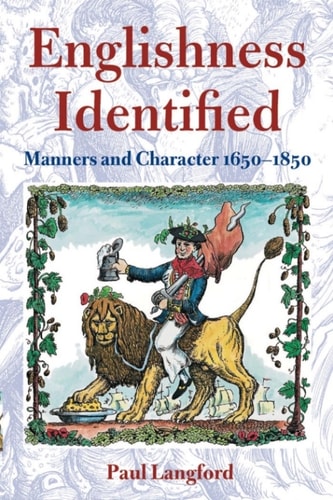
Englishness Identified: Manners and Character, 1650-1850
0
0
As an Amazon Associate and affiliate partner, Menrva Books earns from qualifying purchases. Learn more
Author Description
In the seventeenth century the English were often depicted as a nation of barbarians, fanatics, and king-killers. Two hundred years later they were more likely to be seen as the triumphant possessors of a unique political stability, vigorous industrial revolution, and a world-wide empire. These may have been British achievements; but the virtues which brought about this transformation tended to be perceived as specifically English. Ideas of what constituted Englishness changed from a stock notion of waywardness and unpredictability to one of discipline and dedication. The evolution of the so-called national character - today once more the subject of scrutiny and debate - is traced through the impressions and analyses of foreign observers, and related to English ambitions and anxieties during a period of intense change.
Menrva's Summary
THE THESIS
This work investigates the historical evolution of English national identity and character between 1650 and 1850. Paul B. Langford, a noted historian of eighteenth-century Britain, examines how the perception of the English shifted from a reputation for volatility and fanaticism to one of stability and industrial discipline. By analyzing the intersection of foreign observations and domestic self-perception, Langford argues that these traits were constructed and refined in response to the nation's shifting geopolitical ambitions and internal anxieties.
THE SCOPE MAP
What You Will Find
- Analysis of foreign travelogues and commentaries on English behavior.
- Examination of the transition from seventeenth-century perceptions of barbarism to nineteenth-century ideals of national character.
- Historical context regarding the impact of the Industrial Revolution and imperial expansion on social identity.
Scope Limits
- The analysis is strictly bounded by the years 1650 and 1850.
- The text focuses primarily on the construction of Englishness rather than broader British or Celtic identities.
THE AUTHORITY PERSPECTIVE
Historians frequently cite this work as a significant contribution to the study of national character and social history. Scholars often note the depth of Langford's research into primary source materials and his ability to synthesize complex cultural shifts into a coherent historical narrative.
Page Count:
408
Publication Date:
2002-01-01
Publisher:
Oxford University Press
ISBN-10:
019158858X
ISBN-13:
9780191588587
History
British History
National Identity
Social History
English & College Success