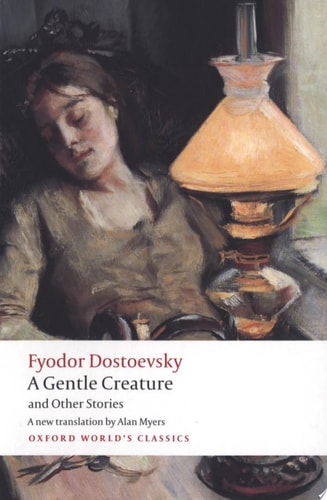
A Gentle Creature and Other Stories
0
0
As an Amazon Associate and affiliate partner, Menrva Books earns from qualifying purchases. Learn more
Author Description
In The Stories In This Volume Dostoevsky Explores Both The Figure Of The Dreamer Divorced From Reality And Also His Own Ambiguous Attitude To Utopianism, Themes Central To Many Of His Great Novels. In White Nights The Apparent Idyll Of The Dreamer's Romantic Fantasies Disguises Profound Loneliness And Estrangement From 'living Life'. Despite His Sentimental Friendship With Nastenka, His Final Withdrawal Into The World Of The Imagination Anticipates The Retreat Into The 'underground' Of Many Of Dostoevsky's Later Intellectual Heroes. A Gentle Creature And The Dream Of A Ridiculous Man Show How Such Withdrawal From Reality Can End In Spiritual Desolation And Moral Indifference And How, In Dostoevsky's View, The Tragedy Of The Alienated Individual Can Be Resolved Only By The Rediscovery Of A Sense Of Compassion And Responsibility Towards Fellow Human Beings. This New Translation Captures The Power And Lyricism Of Dostoevsky's Writing, While The Introduction Examines The Stories In Relation To One Another And To His Novels. About The Series: For Over 100 Years Oxford World's Classics Has Made Available The Widest Range Of Literature From Around The Globe. Each Affordable Volume Reflects Oxford's Commitment To Scholarship, Providing The Most Accurate Text Plus A Wealth Of Other Valuable Features, Including Expert Introductions By Leading Authorities, Helpful Notes To Clarify The Text, Up-to-date Bibliographies For Further Study, And Much More.
Menrva's Summary
THE PULSE
The central conflict arises from the profound psychological isolation of individuals who retreat from reality into the dangerous sanctuary of their own imaginations. The protagonists in these stories grapple with the consequences of their detachment from society, often finding themselves trapped in cycles of loneliness, romantic delusion, or moral apathy. Dostoevsky employs a variety of narrative frameworks, including first-person confessions and introspective monologues, to expose the internal mechanisms of his characters' minds. These figures face the constant tension between their idealized internal worlds and the harsh, often indifferent reality of the external environment.
INSIDE THE PAGES
- Exploration of the 'dreamer' archetype as a precursor to later intellectual protagonists.
- Use of first-person confession to reveal psychological instability.
- Examination of the transition from romantic fantasy to spiritual desolation.
- Focus on the theme of alienation from 'living life.'
- Analysis of the moral consequences of withdrawal from human connection.
- Contrast between sentimental idealism and the reality of human suffering.
- Emphasis on the necessity of compassion and responsibility toward others.
- Integration of philosophical inquiry into the structure of short fiction.
THE COLLECTIVE ECHO
Readers and critics frequently highlight these stories as essential windows into the development of Dostoevsky's major thematic concerns. Discussion often centers on the author's ability to map the internal landscape of the alienated individual with clinical precision. Many note that the pacing is deliberate, favoring psychological depth over rapid plot progression. The atmosphere is consistently described as introspective and somber, reflecting the characters' struggles with their own isolation. Readers often find the transition from the romanticism of early works to the darker, more existential inquiries of later pieces to be a compelling study in literary evolution.
Page Count:
160
Publication Date:
1995-01-01
Publisher:
Oup Oxford
ISBN-10:
0191593699
ISBN-13:
9780191593697
Classic Literature
Short Stories
Psychological
Philosophical
Russian