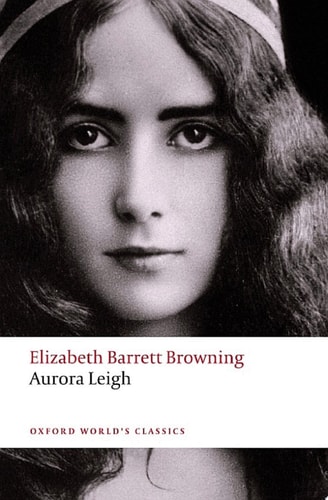
Aurora Leigh
0
0
As an Amazon Associate and affiliate partner, Menrva Books earns from qualifying purchases. Learn more
Author Description
Aurora Leigh is the foremost example of the mid-nineteenth-century poem of contemporary life. This verse-novel is a richly detailed representation of the early Victorian age. The social panorama extends from the slums of London, through the literary world, to the upper classes and a number of superb satiric portraits: an aunt with rigidly conventional notions of female education; Romney Leigh, the Christian socialist; Lord Howe, the amateur radical; Sir Blaise Delorme, the ostentatious Roman Catholic; and the unscrupulous society beauty Lady Waldemar. However, the dominant presence in the work is the narrator, Aurora Leigh herself. From early years in Italy and adolescence in the West Country to the vocational choices, creative struggles, and emotional entanglements of her first decade of adult life, Aurora Leigh develops her ideas on art, love, God, the Woman Question, and society. This is the first critically edited and fully annotated edition for almost a century. ABOUT THE SERIES: For over 100 years Oxford World's Classics has made available the widest range of literature from around the globe. Each affordable volume reflects Oxford's commitment to scholarship, providing the most accurate text plus a wealth of other valuable features, including expert introductions by leading authorities, helpful notes to clarify the text, up-to-date bibliographies for further study, and much more.
Menrva's Summary
THE PULSE
Aurora Leigh struggles to reconcile her ambition as a female poet with the restrictive societal expectations of Victorian England. The protagonist navigates the tension between her creative vocation and the demands of love, specifically her complex relationship with her cousin Romney Leigh. As she moves from Italy to England, she encounters various social strata, ranging from the impoverished to the aristocracy. The narrative framework utilizes a first-person perspective, allowing the reader to witness her intellectual and emotional development over the course of a decade.
INSIDE THE PAGES
- Extensive use of blank verse to convey narrative progression
- Satirical character sketches of Victorian social archetypes
- Exploration of the Woman Question and female autonomy
- Detailed descriptions of the London literary scene
- Philosophical debates regarding the role of art in society
- Contrast between Italian landscapes and English domesticity
- Examination of Christian socialism and class conflict
- Introspective analysis of the narrator's creative process
THE COLLECTIVE ECHO
Readers and critics frequently identify this work as a significant contribution to the nineteenth-century verse-novel tradition. Discussion often centers on the balance between the protagonist's personal growth and the broader critique of Victorian social structures. Many highlight the effectiveness of the author's voice in articulating the challenges faced by women pursuing professional artistic careers. The narrative is often praised for its dense, descriptive passages that provide a vivid window into the era's cultural and political climate.
Page Count:
415
Publication Date:
1998-01-01
Publisher:
OUP Oxford
ISBN-10:
0191605794
ISBN-13:
9780191605796
Poetry
Social Commentary
Verse Novel
English
Victorian
classic
English & College Success
Feminist
Community Tags
Other Editions(9)


Similar Books

Reader Comments
Share Your Thoughts
No comments yet. Be the first to share your thoughts!