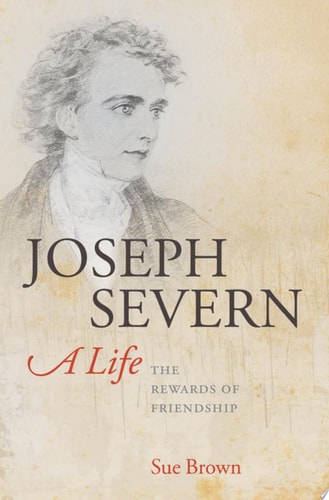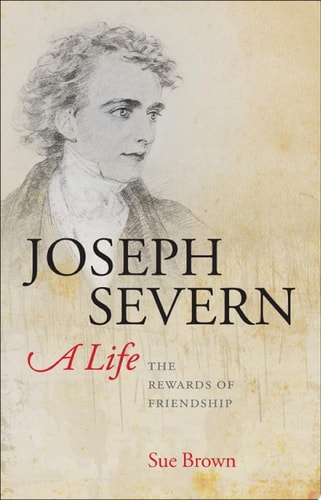
Joseph Severn, A Life: The Rewards of Friendship
0
0
As an Amazon Associate and affiliate partner, Menrva Books earns from qualifying purchases. Learn more
Author Description
This biography of Joseph Severn (1793-1879), the best known but most controversial of Keats's friends, is based on a mass of newly discovered information, much of it still in private hands. Severn accompanied the dying Keats to Italy, nursed him in Rome and reported on his last weeks there in a famous series of moving letters. After Keats's death in relative obscurity, Severn pressed hard for an early biography and a more fitting memorial in the Protestant Cemetery in Rome. In the nineteenth century Severn's friendship with Keats was seen as a model of devoted masculine companionship and he was reburied by popular acclaim next to Keats in 1882. In the twentieth century, by contrast, he was denigrated as an unreliable, self-promoting witness. Sue Brown's book fills a major gap in studies of Keats and his circle. It reassesses Severn's character, friendship with Keats, and influence on the posthumous development of the poet's fame and provides new information on Keats's death. The significance of Severn's artistic career has previously been downplayed. This book offers the first full assessment of his work and of his turbulent spell as British Consul in Rome from 1860 to 1871. Keats was not Severn's only famous friend. For most of his adult life Severn was at the heart of the large, lively British community in Rome welcoming amongst others Gladstone, who became his most important patron, Ruskin, Walter Scott, Wordsworth, Turner, Samuel Palmer, David Wilkie, and many more. He maintained long friendships with Leigh Hunt, Mary Shelley, Charles Eastlake, Richard Monckton Milnes, amongst others, and enjoyed a rich family life.
Menrva's Summary
THE THESIS
This biography investigates the complex character and legacy of Joseph Severn, challenging the historical dichotomy that paints him as either a devoted friend to John Keats or a self-promoting opportunist. Sue Brown utilizes a wealth of previously inaccessible private documents and correspondence to reconstruct Severn's life beyond his association with the poet. The work argues that Severn’s contributions to the artistic and diplomatic circles of 19th-century Rome have been significantly undervalued by previous scholarship.
THE SCOPE MAP
What You Will Find
- Detailed examination of Severn's role as the primary caregiver during Keats's final days in Rome.
- Analysis of Severn's professional career as a painter and his tenure as British Consul in Rome from 1860 to 1871.
- Documentation of his social interactions with prominent figures including Gladstone, Ruskin, and Mary Shelley.
Scope Limits
- The text focuses primarily on Severn's life and professional trajectory rather than providing a comprehensive literary analysis of Keats's poetry.
THE AUTHORITY PERSPECTIVE
Scholars and historians recognize this work as a definitive reassessment of Severn’s life, noting its success in moving beyond the polarized views of the 19th and 20th centuries. Readers frequently highlight the depth of the archival research as a significant contribution to the study of the Keats circle.
Page Count:
429
Publication Date:
2009-01-01
Publisher:
OUP Oxford
ISBN-10:
0191609870
ISBN-13:
9780191609879
History
Biography
Great Britain
19th Century
Art History
English
English & College Success
Literary Criticism
Community Tags
Similar Books