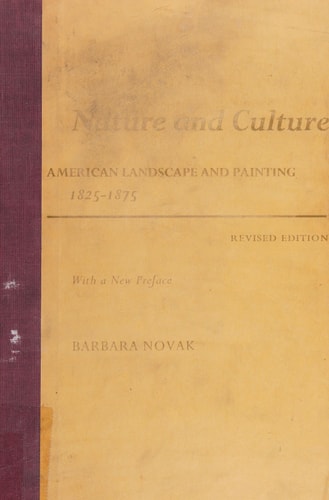
Nature and Culture: American Landscape and Painting, 1825-1875
0
0
As an Amazon Associate and affiliate partner, Menrva Books earns from qualifying purchases. Learn more
Author Description
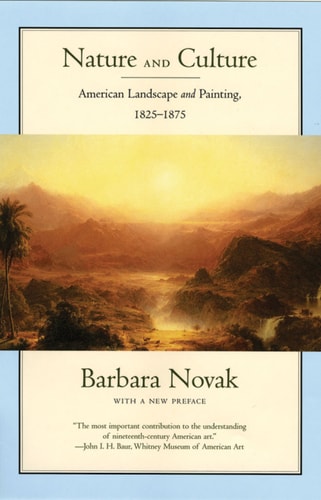
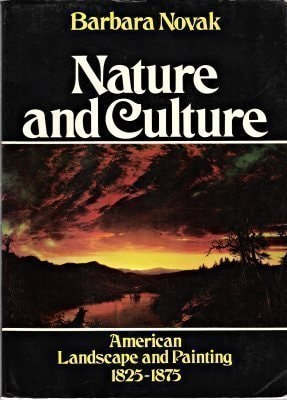
In this richly illustrated volume, including a number of stunning color prints, Barbara Novak explains that for fifty extraordinary years, American society bestowed in the idea of Nature its most cherished ideals. Between 1825 and 1875 all kinds of Americans--artists, writers, scientists, as well as everyday citizens--believed that God in Nature could resolve human contradictions, and that nature itself confirmed the American destiny. During these years Nature, God, and Man converged to become a trinity, and it was through the landscape painters, the leaders of this intellectual movement, that the nation was reminded of divine benevolence "by keeping before their eyes the mountains, trees, forests, and lakes." Using diaries and letters of the artists as well as quotes from literary texts, journals, and periodicals, Novak illuminates the range of ideas projected on to the American landscape by painters such as Thomas Cole, Albert Bierstadt, Frederic Edwin Church, Asher B. Durand, Fitz Hugh Lane, and Martin J. Heade, and writers such as Ralph Waldo Emerson, Henry David Thoreau, William Wordsworth, Théodore Rousseau, and Frederich Wilhelm Schelling.Adding a rich new dimension to the discussion of nature's influence on the American mind, Novak explains how religion, philosophy, science, and literatrue served as the support system for the idea of God in Nature. She shows that the idea of nature as a national vested interest was invaluable to a young expanding nation, but ultimately this essentially monolithic view collapsed from within, undermined by the Civil War, Darwinism, and a burgeoning technological landscape. Taking American landscape painting in its golden era as a product of society, she examines the cultural background of paintings as an index to their intrinsic meaning. She explains, for example, how new discoveries in science were made consonant with Deity, how religion itself permeated nature with the idea of Creation, and how the landscape artists were giv
Menrva's Summary
THE THESIS
This volume investigates how the American landscape served as a primary vessel for national identity, religious belief, and philosophical inquiry between 1825 and 1875. Barbara Novak, a distinguished art historian, utilizes a multidisciplinary approach to argue that 19th-century American society viewed nature as a divine manifestation that reconciled human contradictions and validated the nation's destiny. By synthesizing primary source materials—including artist diaries, letters, and contemporary literary texts—Novak constructs a framework that positions landscape painting as the central intellectual index of the era's cultural values.
THE SCOPE MAP
What You Will Find
- An analysis of the intellectual convergence of religion, philosophy, science, and literature in 19th-century America.
- Detailed examinations of major landscape painters including Thomas Cole, Albert Bierstadt, and Frederic Edwin Church.
- A historical study of the rise and eventual decline of the 'God in Nature' paradigm following the Civil War and the rise of Darwinism.
- A methodology that treats visual art as a primary document for understanding the social and cultural history of the United States.
THE AUTHORITY PERSPECTIVE
Experts recognize this work as a foundational text for understanding the intersection of American art and intellectual history. Scholars frequently cite the book for its rigorous integration of visual analysis with the broader philosophical currents of the 19th century.
Page Count:
476
Publication Date:
1995-12-28
Publisher:
Oxford University Press
ISBN-10:
0195103521
ISBN-13:
9780195103526
Philosophy
American History
Art History
19th Century
Landscape Painting
Community Tags
Other Editions(3)
Similar Books






Reader Comments
Share Your Thoughts
No comments yet. Be the first to share your thoughts!