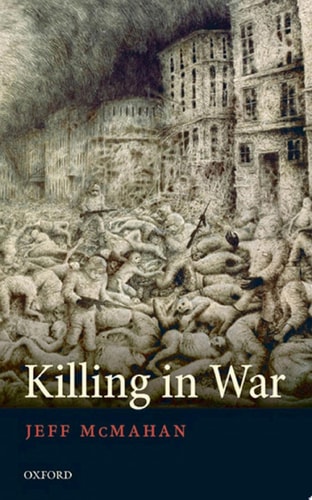
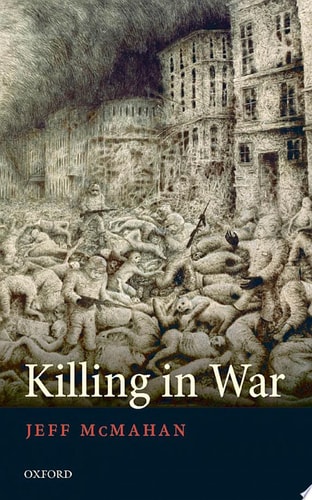
Killing in War
0
0
As an Amazon Associate and affiliate partner, Menrva Books earns from qualifying purchases. Learn more
Author Description
Killing a person is in general among the most seriously wrongful forms of action, yet most of us accept that it can be permissible to kill people on a large scale in war. Does morality become more permissive in a state of war? Jeff McMahan argues that conditions in war make no difference to what morality permits and the justifications for killing people are the same in war as they are in other contexts, such as individual self-defence. This view is radically at odds with the traditional theory of the just war and has implications that challenge common sense views. McMahan argues, for example, that it is wrong to fight in a war that is unjust because it lacks a just cause.
Menrva's Summary
THE THESIS
This book investigates whether the moral constraints governing the killing of individuals in civilian life apply equally to the conduct of soldiers during wartime. Jeff McMahan, a professor of moral philosophy, utilizes a rigorous analytical framework to challenge the traditional 'just war' theory. He argues that the moral justifications for killing are consistent across all contexts, asserting that the state of war does not provide a unique moral exemption for combatants.
THE SCOPE MAP
What You Will Find
- A systematic critique of the traditional distinction between combatants and non-combatants.
- An application of individual self-defense principles to state-sanctioned military conflict.
- An analysis of the moral status of soldiers fighting for unjust causes.
Scope Limits
- The text does not provide a comprehensive history of international law or the Geneva Conventions.
- It focuses primarily on normative moral philosophy rather than practical military strategy or geopolitical policy.
THE AUTHORITY PERSPECTIVE
Experts in political philosophy and ethics recognize this work as a significant challenge to the conventional understanding of the moral equality of combatants. Readers frequently note the high level of academic density and the challenging nature of the author's logical arguments.
Page Count:
262
Publication Date:
2009-01-01
Publisher:
OUP Oxford
ISBN-10:
0191609471
ISBN-13:
9780191609473
Philosophy
Ethics
War Studies
Military Ethics
Just war
Community Tags
Other Editions(4)


Similar Books