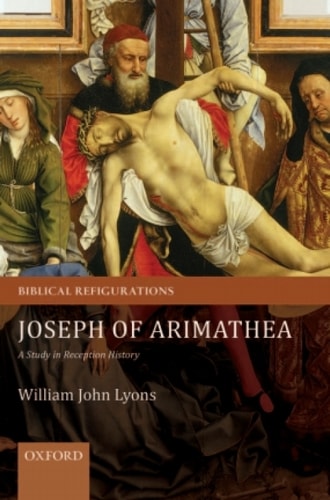
Joseph of Arimathea: A Study in Reception History
0
0
As an Amazon Associate and affiliate partner, Menrva Books earns from qualifying purchases. Learn more
Author Description
Joseph of Arimathea: A Study in Reception History examines the extensive and convoluted afterlives of a minor biblical character who nevertheless plays a major role in three pivotal scenes in the passion of Jesus Christ as presented by the four canonical Gospels: the request to Pilate for the body, the descent from the cross, and the burial of Jesus' corpse. Characterised in subtly different ways by each Evangelist, these sparse biblical Josephs were expanded, expounded, translated, harmonised, and extended by early literary sources and developed thematically by the artistic traditions of the Renaissance. In the Medieval Period, Joseph arrived, by 'fortuitous' accident, in the British Isles, becoming an iconic figure for English nationalists (through the Glastonbury tradition) and for British Imperialists (through Parry's musical setting of Blake's Jerusalem). Twentieth-century developments in church life, film, literature, spiritualism, and studies of the historical Joseph round out what such a minor character can accomplish, given a sufficient richness in original texts and the right opportunities afforded by later cultural developments. In Joseph of Arimathea's case, certain aspects proved highly adaptable, especially the sharp contrast provided by his portrayal as a bold active figure in the Gospel of Mark and as a fearful passive character in the Gospel of John, the attractiveness of his wealth and nobility to those who considered themselves of similar (or much higher) status, and the opportunities provided by his swift appearance and departure from the most important event in Christianity's foundational documents.
Menrva's Summary
THE THESIS
This study investigates how the minor biblical figure of Joseph of Arimathea evolved through centuries of cultural, artistic, and theological interpretation. William John Lyons, a scholar in biblical reception history, utilizes a diachronic approach to trace the transformation of Joseph from a brief gospel character into a central icon of British nationalism and imperial identity. The work argues that the ambiguity and sparse detail of the original canonical texts provided a fertile foundation for later traditions to project diverse ideological and spiritual agendas onto the figure.
THE SCOPE MAP
What You Will Find
- Analysis of the four canonical Gospel portrayals of Joseph of Arimathea.
- Examination of medieval Glastonbury traditions and their role in English nationalism.
- Review of artistic and literary developments from the Renaissance to the twentieth century.
- Discussion of the influence of musical settings, such as Parry's Jerusalem, on cultural perception.
Scope Limits
- The text does not attempt to reconstruct the historical biography of the actual Joseph of Arimathea.
- It does not provide an exhaustive catalog of every minor artistic depiction of the character throughout history.
THE AUTHORITY PERSPECTIVE
Scholars in the field of reception history recognize this work as a rigorous examination of how cultural contexts shape the interpretation of biblical figures. Readers frequently note the academic density of the prose, which serves as a foundational text for those interested in the intersection of theology and cultural studies.
Page Count:
208
Publication Date:
2014-01-01
Publisher:
OUP Oxford
ISBN-10:
0191612197
ISBN-13:
9780191612190
Religion
Reception History
Literary Criticism
Christian Theology
Religious History
Bibles
Community Tags
Similar Books