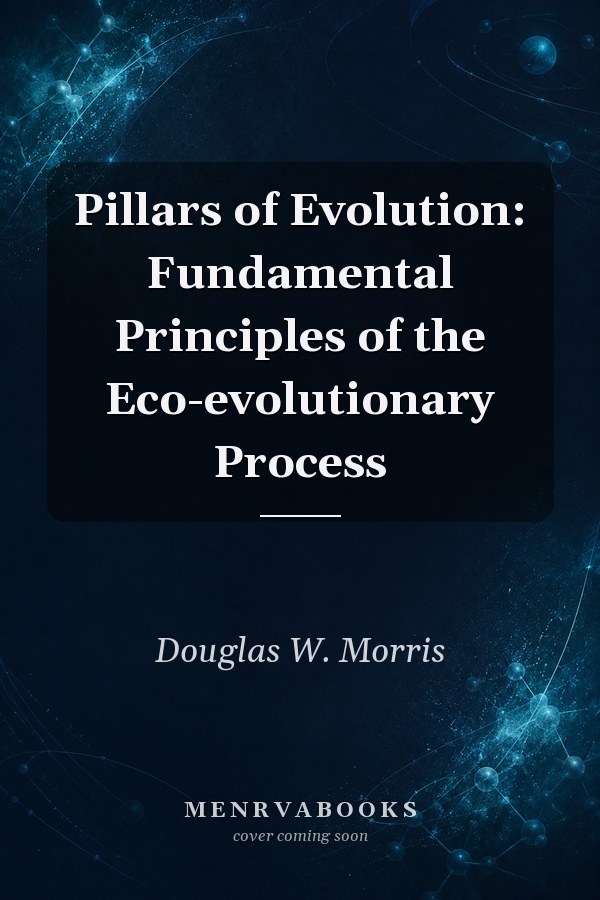
Pillars of Evolution: Fundamental Principles of the Eco-evolutionary Process
0
0
As an Amazon Associate and affiliate partner, Menrva Books earns from qualifying purchases. Learn more
Author Description
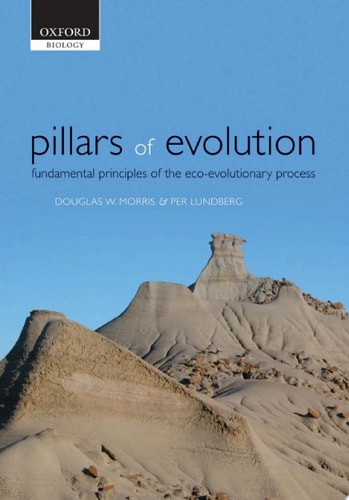
Pillars of Evolution provides a fresh and provocative perspective on adaptive evolution. Readers new to the study of evolution will find a refreshing new insight that establishes evolutionary biology as a rigorous and predictive science, whilst practicing biologists will discover a provocative book that challenges traditional approaches. The book begins by leading readers through the mechanics of heredity, reproduction, movement, survival, and development. With that framework in place, it then explores the numerous ways that traits emerge from the interactions between genetics, development, and the environment. The key message is that adaptive changes in traits (and their underlying allelic frequencies) evolve through the traits' functions and their connection with fitness. The complex mappings from genes-to-traits-to-fitness are characterized in the structure of evolution. A single structure matrix describes why individuals vary in the values of adaptive traits, their ability to perform the function of those traits, and in the fitness they accrue. Fitness depends on how organisms interact with and perceive their environment in time and space. These relationships are made explicit in spatial, temporal, and organizational scale that also sets the stage for the crucially important role that ecology always plays in evolution. The ecological hallmarks of density- and frequency-dependent interactions allow the authors to explore new and exciting insights into evolution's dynamics. The theories and principles are then brought together in a final synthesis on adaptation. The book's unique approach unites genetic, development, and environmental influences into a single comprehensive treatment of the eco-evolutionary process.
Menrva's Summary
THE THESIS
This book investigates how the integration of genetics, development, and environmental interactions establishes evolutionary biology as a rigorous, predictive science. Douglas W. Morris and Per Lundberg, both established researchers in ecology and evolution, utilize a structural matrix framework to analyze how adaptive traits emerge and persist. Their primary argument posits that fitness is not merely a genetic outcome but a function of how organisms perceive and interact with their environment across spatial and temporal scales.
THE SCOPE MAP
What You Will Find
- A structural matrix framework for mapping genes to traits and fitness.
- Analysis of density- and frequency-dependent ecological interactions.
- Theoretical synthesis of heredity, reproduction, movement, and development.
Scope Limits
- The text does not provide a comprehensive history of evolutionary thought.
- It does not focus on molecular-level genetic sequencing techniques.
THE AUTHORITY PERSPECTIVE
Experts recognize this work as a significant contribution to the field of eco-evolutionary dynamics, particularly for its attempt to unify disparate biological disciplines. Readers frequently note the academic density of the prose, which is best suited for graduate-level students and professional biologists.
Page Count:
280
Publication Date:
2011-01-01
Publisher:
Oup Oxford
ISBN-10:
0191626570
ISBN-13:
9780191626579
Science
Natural History
Genetics
Ecology
Academic
Evolutionary Biology
Community Tags
Other Editions(3)

Similar Books











Reader Comments
Share Your Thoughts
No comments yet. Be the first to share your thoughts!