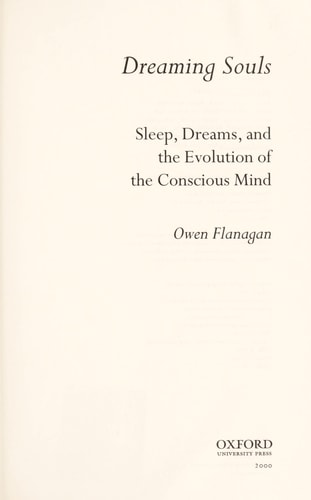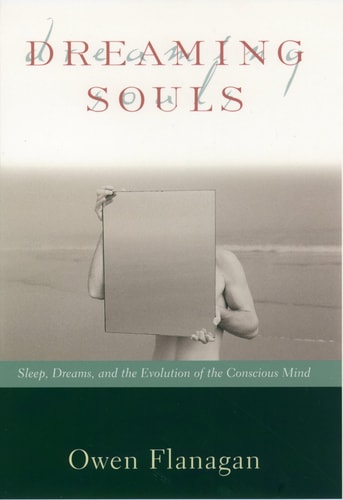
Dreaming Souls: Sleep, Dreams and the Evolution of the Conscious Mind
0
0
As an Amazon Associate and affiliate partner, Menrva Books earns from qualifying purchases. Learn more
Author Description
What, if anything, do dreams tell us about ourselves? What is the relationship between types of sleep and types of dreams? Does dreaming serve any purpose? Or are dreams simply meaningless mental noise--"unmusical fingers wandering over the piano keys"?With expertise in philosophy, psychology, and neuroscience, Owen Flanagan is uniquely qualified to answer these questions. And in Dreaming Souls he provides both an accessible survey of the latest research on sleep and dreams and a compelling new theory about the nature and function of dreaming. Flanagan argues that while sleep has a clear biological function and adaptive value, dreams are merely side effects, "free riders," irrelevant from an evolutionary point of view. But dreams are hardly unimportant. Indeed, Flanagan argues that dreams are self-expressive, the result of our need to find or to create meaning, even when we're sleeping. Rejecting Freud's theory of manifest and latent content--of repressed wishes appearing in disguised form--Flanagan shows how brainstem activity during sleep generates a jumbled profusion of memories, images, thoughts, emotions, and desires, which the cerebral cortex then attempts to shape into a more or less coherent story. Such dream-narratives range from the relatively mundane worries of non REM sleep to the fantastic confabulations of deep REM that resemble psychotic episodes in their strangeness. But however bizarre these narratives may be, they can shed light on our mental life, our well being, and our sense of self.Written with clarity, lively wit, and remarkable insight, Dreaming Souls offers a fascinating new way of apprehending one of the oldest mysteries of mental life.
Menrva's Summary
THE THESIS
Does the act of dreaming serve a specific evolutionary purpose, or is it merely a byproduct of biological processes occurring during sleep? Owen Flanagan, a philosopher with extensive grounding in cognitive science and neuroscience, investigates the intersection of sleep architecture and the conscious mind. He challenges traditional psychoanalytic interpretations by proposing that dreams are 'free riders'—meaningless mental noise generated by brainstem activity—that the cerebral cortex subsequently attempts to organize into coherent narratives. By synthesizing empirical data with philosophical inquiry, he argues that while dreams lack adaptive biological utility, they remain essential for self-expression and the construction of personal meaning.
THE SCOPE MAP
What You Will Find
- An analysis of the relationship between REM and non-REM sleep cycles and their respective dream content.
- A critique of Freudian theories regarding latent and manifest dream content.
- A neurobiological framework explaining how the cerebral cortex interprets random brainstem activity.
- An exploration of the connection between dream narratives and the human sense of self and well-being.
THE AUTHORITY PERSPECTIVE
Experts and readers frequently note the accessibility of Flanagan's prose, which successfully bridges the gap between complex neuroscience and philosophical theory. The text is widely regarded as a balanced, critical examination of dream research that avoids the speculative pitfalls common in the field of dream interpretation.
Page Count:
228
Publication Date:
2001-05-17
Publisher:
Oxford University Press
ISBN-10:
0195142357
ISBN-13:
9780195142358
Philosophy
Science
Non-Fiction
Psychology
Psychological aspects
Dream interpretation
Allied Health
Neuroscience
Medical
Mind & Body