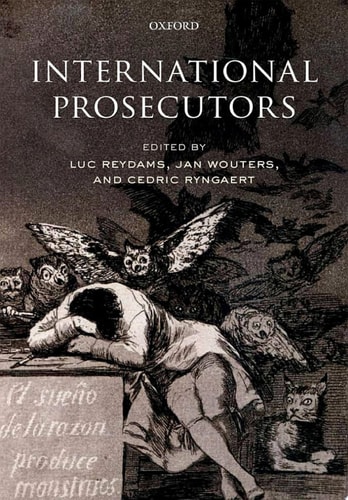
International Prosecutors
0
0
As an Amazon Associate and affiliate partner, Menrva Books earns from qualifying purchases. Learn more
Author Description
This volume examines the prosecution as an institution and a function in a dozen international and hybrid criminal tribunals, from Nuremberg to the International Criminal Court. It is the result of a sustained collaborative effort among some twenty scholars and (former) tribunal staffers. The starting point is that the prosecution shapes a tribunal's practice and legacy more than any other organ and that a systematic examination of international prosecutors is therefore warranted. The chapters are organized chronologically, according to the successive phases of the life of the institution and the various stages of the trials. The analysis includes each institution's establishment, mandate and jurisdiction, as well as the prosecutorial framework and strategy, the prosecutor's external relations and the completion of the institution's work. The book also considers the prosecutors' independence and impartiality, and their accountability for their decisions. The volume thus provides a comprehensive picture of the mandate, organization, and operation of the prosecution in international criminal trials. As the first comprehensive study of an international legal actor whose decisions have widespread political repercussions, this book will be essential reading for all with an interest in international criminal justice.
Menrva's Summary
THE THESIS
How does the office of the prosecutor function as the primary architect of institutional practice and legacy within international and hybrid criminal tribunals? Edited by Jan Wouters, Luc Reydams, and Cedric Ryngaert, this volume synthesizes the collaborative research of twenty scholars and former tribunal staff members. The authors utilize a comparative, chronological framework to analyze the evolution of prosecutorial roles from the Nuremberg trials through the establishment of the International Criminal Court. The text argues that the prosecutor's strategic decisions and external relations are the most significant factors in determining the long-term impact of international legal institutions.
THE SCOPE MAP
What You Will Find
- Comparative analysis of twelve international and hybrid criminal tribunals.
- Examination of institutional mandates, jurisdiction, and prosecutorial strategies.
- Assessment of prosecutorial independence, impartiality, and accountability mechanisms.
- Chronological documentation of the life cycle of international criminal institutions.
Scope Limits
- The text focuses primarily on the institutional and functional aspects of the prosecution rather than the specific defense strategies or judicial rulings of each case.
THE AUTHORITY PERSPECTIVE
Experts identify this volume as a foundational reference for understanding the administrative and political mechanics of international criminal justice. Readers frequently note the academic density of the prose, which serves as a comprehensive resource for legal scholars and practitioners in the field of international law.
Page Count:
940
Publication Date:
2012-01-01
Publisher:
OUP Oxford
ISBN-10:
0191637238
ISBN-13:
9780191637230
History
Law
International Law
Professional Career & Trade
Community Tags
Similar Books