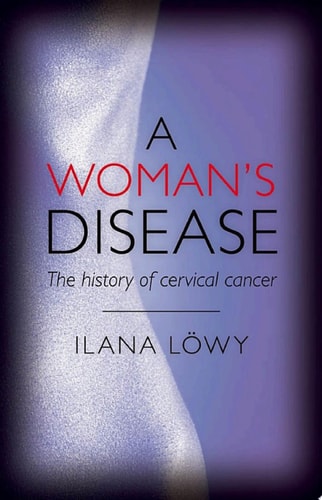
A Woman's Disease: The History of Cervical Cancer
0
0
As an Amazon Associate and affiliate partner, Menrva Books earns from qualifying purchases. Learn more
Author Description
Cervical cancer is an emotive disease with multiple connotations. It has stood for the horror of cancer, the curse of femininity, the hope of cutting-edge medical technologies and the promise of screening for malignant tumours. For a long time, this disease was identified with the most dreaded aspects of malignancies: prolonged invalidity and chronic pain, but also physical degradation, shame and social isolation. Cervical cancer displayed in parallel the dangers of being a woman. In the 20th century, innovations initially developed to control cervical cancer - radiotherapy and radium therapy, exfoliate cytology (Pap smear), homogenisation of the 'staging' of tumours, mass campaigns for an early detection of precancerous lesions of the cervix - set standards for diagnosis, treatment and prevention of other malignancies. In the late 20th century, cervical cancer underwent another important change. With the display of the role of selected strands of HPV (Human Papilloma Virus) in the genesis of this malignancy, it was transformed into a sexually transmitted disease. This new understanding of cervical cancer linked it more firmly with lifestyle choices, and thus increased the danger of stigmatisation of patients; on the other hand it opened the possibility for efficient prevention of this malignancy through vaccination. Ilana Lowy follows the disease from antiquity to the 21st century, focussing on the period since the mid-19th century, during which cervical cancer was dissociated from other gynaecological disorders and became a distinct entity. Following the ways in which new developments in science, medicine, and society have affected beliefs about medical progress and an individual's responsibility, gender roles, reproduction, and sex, Lowy demonstrates our understanding of what cervical cancer is, and how it can be prevented and cured.
Menrva's Summary
THE THESIS
This book investigates the historical evolution of cervical cancer from a general gynecological disorder into a distinct, medically defined malignancy shaped by shifting social, scientific, and gender-based perceptions. Ilana Lowy, a historian of science and medicine, utilizes a longitudinal analysis of medical records, clinical practices, and public health campaigns to argue that our understanding of the disease is inextricably linked to broader cultural attitudes toward femininity, sexuality, and medical progress. The text examines how the transition from viewing the disease as a physical degradation to a preventable, virus-linked condition has redefined patient responsibility and societal stigma.
THE SCOPE MAP
What You Will Find
- Historical analysis of cervical cancer from antiquity to the 21st century.
- Examination of the development of radiotherapy, radium therapy, and the Pap smear.
- Discussion of the impact of HPV discovery on public health policy and vaccination.
- Exploration of the intersection between gender roles and medical diagnosis.
Scope Limits
- The primary focus is restricted to the period from the mid-19th century to the present.
- The text does not provide a clinical manual for current treatment protocols.
THE AUTHORITY PERSPECTIVE
Scholars and medical historians frequently cite this work as a comprehensive examination of how social constructs influence medical categorization. Readers often note the academic rigor of the prose, which balances technical medical history with sociological analysis.
Page Count:
231
Publication Date:
2011-01-01
Publisher:
OUP Oxford
ISBN-10:
019163414X
ISBN-13:
9780191634147
Social History
Medical
Oncology
MEDICAL History
Public Health
Uterus_cancer
Allied Health
Social Aspects
Medicine history
Womens Health
Community Tags
Similar Books