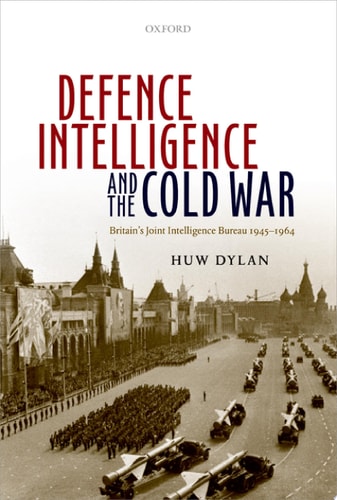
Defence Intelligence and the Cold War: Britain's Joint Intelligence Bureau 1945-1964
0
0
As an Amazon Associate and affiliate partner, Menrva Books earns from qualifying purchases. Learn more
Author Description
During the Second World War British intelligence provided politicians and soldiers with invaluable knowledge. Britain was determined to maintain this advantage following victory, but the wartime machinery was uneconomical, unwieldy, and unsuitable for peace. Drawing on oral testimony, international archives, and private papers, Defence Intelligence and the Cold War provides the first history of the hitherto little-known organisation designed to preserve and advance British capability in military and military-related intelligence for the Cold War: the Joint Intelligence Bureau (JIB). Headed by General Eisenhower's wartime intelligence man, Major General Kenneth Strong, the JIB was central to the mission to spy on and understand the Soviet Union, and the broader Communist world. It did so from its creation in 1946 to its end in 1964, when it formed a central component of the new Defence Intelligence Staff. This volume reveals hitherto hidden aspects of Britain's mission to map the Soviet Union for nuclear war, the struggle to understand and contain the economies of the USSR, China, and North Korea in peace and during the Korean War, and the urgent challenge to understand the nature and scale of the Soviet bomber and missile threat in the 1950s and 1960s. The JIB's dedicated work in these fields won it the support of some politicians and military men, but the enmity of others who saw the centralised organisation as a threat to traditional military intelligence. The intelligence officers of the JIB waged Cold War not only with Communist adversaries but also in Whitehall.
Menrva's Summary
THE THESIS
This book investigates the operational history and strategic significance of the Joint Intelligence Bureau (JIB) in maintaining British military intelligence capabilities during the early Cold War. Author Huw Dylan, a specialist in intelligence and security studies, utilizes a combination of oral testimonies, international archival records, and private papers to reconstruct the JIB's internal development. The text argues that the JIB served as a critical, albeit contested, mechanism for mapping Soviet capabilities and managing the transition from wartime intelligence structures to a centralized peacetime apparatus.
THE SCOPE MAP
What You Will Find
- Detailed analysis of the JIB's role in monitoring the Soviet Union, China, and North Korea.
- Examination of intelligence efforts regarding nuclear war planning and missile threat assessment.
- Documentation of the bureaucratic friction between the JIB and traditional military intelligence branches.
- Insights into the leadership of Major General Kenneth Strong.
Scope Limits
- The study focuses primarily on the period between 1945 and 1964.
- It does not cover the post-1964 evolution of the Defence Intelligence Staff in extensive detail.
THE AUTHORITY PERSPECTIVE
Experts recognize this work as a definitive institutional history of a previously overlooked component of the British intelligence community. Readers frequently note the meticulous archival research and the clarity with which the author navigates complex bureaucratic and geopolitical landscapes.
Page Count:
256
Publication Date:
2014-01-01
Publisher:
OUP Oxford
ISBN-10:
0191631434
ISBN-13:
9780191631436
History
Espionage British
Cold War
Military History
Great Britain
European History
British History
Community Tags
Other Editions(2)
Similar Books