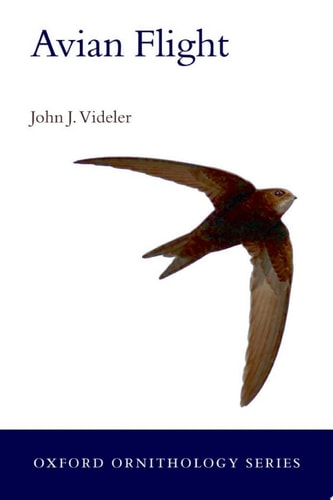
Avian Flight
0
0
As an Amazon Associate and affiliate partner, Menrva Books earns from qualifying purchases. Learn more
Author Description
Bird flight has always intrigued mankind. This book provides an up-to-date account of our existing knowledge on the subject, offering new insights and challenging some established views. A brief history of the science of flight introduces the basic physical principles governing aerial locomotion. This is followed by a treatment of flight-related functional morphology, concentrating on the difference in shape of the arm and hand part of the wings, on the structure and function of tails, and on the shape of the body. The anatomy and mechanical properties of feathers receive special attention. Aerodynamic principles used by birds are explained in theory by simply applying Newton's laws, and in practice by showing the direction and velocity of the attached flow around an arm wing cross section and of the leading edge vortex flow above a hand wing. The Archaeopteryx fossils remain crucial in our understanding of the evolution of bird flight despite the recent discovery of a range of well-preserved ancient birds. Avian Flight offers a novel insight into the interactions between wings and air which challenges established theories relating to the origin of bird flight. Take-off, flapping flight, gliding and landing are the basic ingredients of bird flight, and birds use a variety of flight styles from hovering to soaring. Flight muscles are the engines that generate the force required to keep the wings and tail in the gliding configuration and perform work during flapping motion. The energy required to fly can be estimated or measured directly, and a comparison of the empirical results provides insights into the trend in metabolic costs of flight of birds varying in shape and mass from hummingbirds to albatrosses. The book will be of interest to biologists, ornithologists, and bird watchers. It will also be of relevance and use to physicists, mathematicians, and engineers involved with aerodynamics.
Menrva's Summary
THE THESIS
This book investigates the physical principles and functional morphology that enable avian flight, challenging established theories regarding the evolution and mechanics of bird locomotion. John J. Videler, an expert in biomechanics, synthesizes historical scientific perspectives with contemporary research to provide a comprehensive analysis of how birds navigate the air. The text utilizes principles of physics and anatomy to explain the complex interactions between wing structure, feather properties, and aerodynamic forces. By examining flight styles ranging from hovering to soaring, the author constructs a framework for understanding the metabolic costs and mechanical requirements of avian movement.
THE SCOPE MAP
What You Will Find
- Analysis of functional morphology including wing shape, tail structure, and body aerodynamics
- Application of Newton's laws to explain bird flight mechanics
- Comparative study of metabolic costs across species from hummingbirds to albatrosses
- Examination of fossil evidence, specifically Archaeopteryx, in the context of flight evolution
Scope Limits
- The text focuses primarily on mechanical and biological principles rather than behavioral or ecological aspects of bird life
- It does not provide an exhaustive catalog of all avian species but uses specific examples to illustrate aerodynamic concepts
THE AUTHORITY PERSPECTIVE
Experts and academics recognize this work as a rigorous technical resource that bridges the gap between biological morphology and fluid dynamics. Readers frequently note the academic density of the prose, which makes it a specialized reference for biologists, engineers, and serious ornithologists.
Page Count:
516
Publication Date:
2006-01-01
Publisher:
OUP Oxford
ISBN-10:
0191648450
ISBN-13:
9780191648458
Science
Nature
Ornithology
Aerodynamics
Biology
Zoology
Community Tags
Other Editions(5)

Similar Books













Reader Comments
Share Your Thoughts
No comments yet. Be the first to share your thoughts!