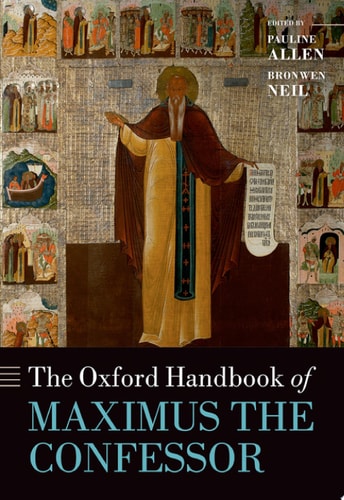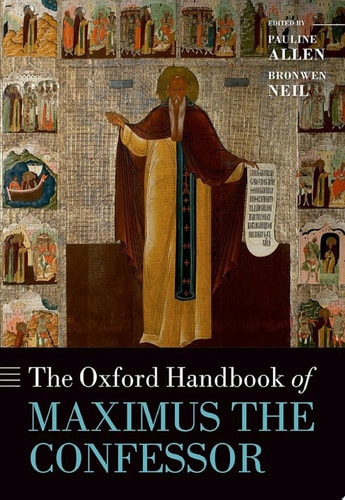
The Oxford Handbook of Maximus the Confessor
0
0
As an Amazon Associate and affiliate partner, Menrva Books earns from qualifying purchases. Learn more
Author Description
Maximus the Confessor (c.580-662) has become one of the most discussed figures in contemporary patristic studies. This is partly due to the relatively recent discovery and critical edition of his works in various genres, including On the Ascetic Life, Four Centuries on Charity, Two Centuries on Theology and the Incarnation, On the 'Our Father', two separate Books of Difficulties, addressed to John and to Thomas, Questions and Doubts, Questions to Thalassius, Mystagogy and the Short Theological and Polemical Works. The impact of these works reached far beyond the Greek East, with his involvement in the western resistance to imperial heresy, notably at the Lateran Synod in 649. Together with Pope Martin I (649-53 CE), Maximus the Confessor and his circle were the most vocal opponents of Constantinople's introduction of the doctrine of monothelitism. This dispute over the number of wills in Christ became a contest between the imperial government and church of Constantinople on the one hand, and the bishop of Rome in concert with eastern monks such as Maximus, John Moschus, and Sophronius, on the other, over the right to define orthodoxy. An understanding of the difficult relations between church and state in this troubled period at the close of Late Antiquity is necessary for a full appreciation of Maximus' contribution to this controversy. The editors of this volume aim to provide the political and historical background to Maximus' activities, as well as a summary of his achievements in the spheres of theology and philosophy, especially neo-Platonism and Aristotelianism.
Menrva's Summary
THE THESIS
This volume investigates the theological, philosophical, and political significance of Maximus the Confessor within the context of seventh-century Byzantine history. Editors Bronwen Neil and Pauline Allen compile contributions from leading scholars to analyze the life and intellectual output of Maximus, specifically focusing on his opposition to monothelitism and his synthesis of neo-Platonic and Aristotelian thought. The text provides a comprehensive framework for understanding how Maximus navigated the complex power dynamics between the imperial government and the church during the transition from Late Antiquity.
THE SCOPE MAP
What You Will Find
- Historical analysis of the Lateran Synod of 649 and the monothelite controversy.
- Examination of Maximus's major works, including the Mystagogy and the Books of Difficulties.
- Exploration of the intersection between political authority and ecclesiastical orthodoxy.
- Detailed discussions on the influence of neo-Platonism and Aristotelianism on Maximus's theology.
Scope Limits
- The volume does not provide a general biography of all figures involved in the seventh-century church.
- It does not offer an exhaustive translation of the primary source texts mentioned.
THE AUTHORITY PERSPECTIVE
Scholars and students of patristic studies frequently cite this handbook as a primary reference for navigating the complex intellectual landscape of Maximus the Confessor. Readers often note the academic density of the prose, which serves as a rigorous resource for those already familiar with the historical period.
Page Count:
640
Publication Date:
2015-01-01
Publisher:
OUP Oxford
ISBN-10:
0191655260
ISBN-13:
9780191655265
History
Religion
Philosophy
Late Antiquity
Theology
European History
Patristics
Church & State