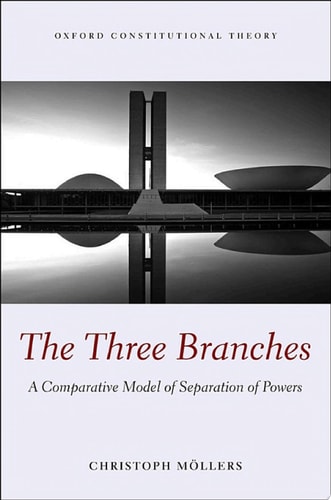
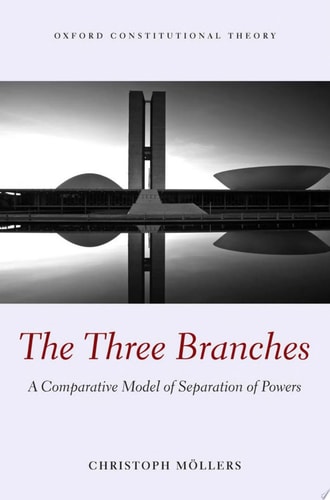
The Three Branches: A Comparative Model of Separation of Powers
0
0
As an Amazon Associate and affiliate partner, Menrva Books earns from qualifying purchases. Learn more
Author Description
The idea of the separation of powers is still popular in much political and constitutional discourse, though its meaning for the modern state remains unclear and contested. This book develops a new, comprehensive, and systematic account of the principle. It then applies this new concept to legal problems of different national constitutional orders, the law of the European Union, and international institutional law. It connects an argument from normative political theory with phenomena taken from comparative constitutional law. The book argues that the conflict between individual liberty and democratic self-determination that is characteristic of modern constitutionalism is proceduralized through the establishment of different governmental branches. A close analysis of the relation between individual and collective autonomy on the one hand and the ways lawmaking through public institutions can be established on the other hand helps us identify criteria for determining how legislative, administrative, and judicial lawmaking can be distinguished and should be organized. These criteria define a common ground in the confusing variety of western constitutional traditions and their diverse use of the notion of separated powers. They also enable us to establish a normative framework that throws a fresh perspective on problems of constitutional law in different constitutional systems: constitutional judicial review of legislation, limits of legislative delegation, parliamentary control of the executive, and standing. Linking arguments from comparative constitutional law and international law, the book then uses this framework to offer a new perspective on the debate on constitutionalism beyond the state. The concept permits certain institutional insights of the constitutional experiences within states to be applied at the international level without falling into any form of methodological nationalism.
Menrva's Summary
THE THESIS
This book investigates how the principle of separation of powers can be systematically redefined to address the modern tension between individual liberty and democratic self-determination. Christoph Moellers, a professor of public law, utilizes a synthesis of normative political theory and comparative constitutional analysis to propose a procedural framework for distinguishing legislative, administrative, and judicial functions. By examining the institutional mechanisms of Western constitutional states, the author establishes criteria to evaluate lawmaking processes across diverse national and international legal orders.
THE SCOPE MAP
What You Will Find
- A systematic normative framework for analyzing governmental branches
- Comparative analysis of national constitutional orders, European Union law, and international institutional law
- Criteria for evaluating legislative delegation, judicial review, and parliamentary oversight
Scope Limits
- The text does not provide a historical survey of the evolution of separation of powers theory
- It avoids prescriptive policy recommendations for specific national political crises
THE AUTHORITY PERSPECTIVE
Legal scholars frequently note the academic density and theoretical rigor of the prose, which demands a strong background in constitutional theory. Experts highlight this work as a significant contribution to the field for its ability to bridge the gap between abstract political philosophy and practical comparative law.
Page Count:
275
Publication Date:
2013-01-01
Publisher:
OUP Oxford
ISBN-10:
0191651613
ISBN-13:
9780191651618
International Law
Constitutional Law
Professional Career & Trade
Comparative Law
Jurisprudence
Community Tags
Other Editions(2)
Similar Books



Reader Comments
Share Your Thoughts
No comments yet. Be the first to share your thoughts!