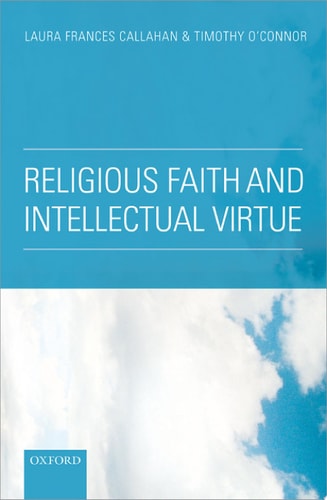
Religious Faith and Intellectual Virtue
0
0
As an Amazon Associate and affiliate partner, Menrva Books earns from qualifying purchases. Learn more
Author Description
Is religious faith consistent with being an intellectually virtuous thinker? In seeking to answer this question, one quickly finds others, each of which has been the focus of recent renewed attention by epistemologists: What is it to be an intellectually virtuous thinker? Must all reasonable belief be grounded in public evidence? Under what circumstances is a person rationally justified in believing something on trust, on the testimony of another, or because of the conclusions drawn by an intellectual authority? Can it be reasonable to hold a belief on a topic over which there is significant, entrenched disagreement among informed inquirers, or should such disagreement lead all parties to modify or suspend their own judgments? Is there anything about faith that exempts it from measurement against such epistemic norms? And if we would so evaluate it, how exactly should we understand the intellectual commitments faith requires? The volume's introduction provides a roadmap of the central issues and controversies as currently discussed by philosophers. In fourteen new essays written to engage nonspecialists as well as philosophers working in religion and epistemology, a diverse and distinguished group of thinkers then consider the place of intellectual virtue in religious faith, exploring one or more of the specific issues noted above.
Menrva's Summary
THE THESIS
This volume investigates whether the practice of religious faith is compatible with the standards of an intellectually virtuous thinker. Editors Laura Frances Callahan and Timothy O'Connor curate a collection of fourteen original essays that examine the intersection of epistemic norms and religious belief. The contributors, a group of distinguished philosophers, utilize contemporary epistemological frameworks to evaluate how faith interacts with requirements for evidence, testimony, and intellectual authority.
THE SCOPE MAP
What You Will Find
- Analysis of intellectual virtue in the context of religious belief
- Discussions on the role of testimony and intellectual authority in justification
- Examinations of peer disagreement and its impact on rational belief
- A comprehensive introduction outlining current controversies in epistemology
Scope Limits
- The text does not provide a singular theological defense of faith
- It does not focus on historical or sociological perspectives of religion
THE AUTHORITY PERSPECTIVE
Experts identify this collection as a significant contribution to the dialogue between analytic epistemology and the philosophy of religion. Readers frequently note the academic density of the prose, which is designed to challenge both specialists and advanced students in the field.
Page Count:
352
Publication Date:
2014-01-01
Publisher:
OUP Oxford
ISBN-10:
0191652318
ISBN-13:
9780191652318
Philosophy
Religion
Epistemology
Knowledge Theory
Philosophy of
Theology
Community Tags
Other Editions(3)


Similar Books