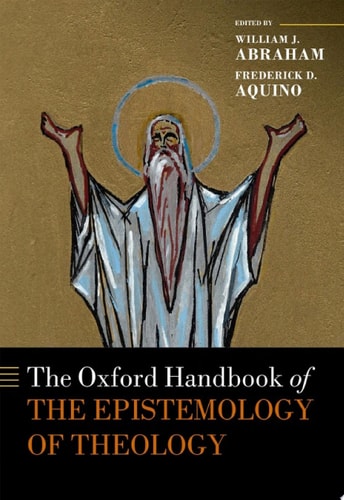
The Oxford Handbook of the Epistemology of Theology
0
0
As an Amazon Associate and affiliate partner, Menrva Books earns from qualifying purchases. Learn more
Author Description
The Oxford Handbook of the Epistemology of Theology brings together leading scholars in the fields of theology and epistemology to examine and articulate what can be categorized as appropriate epistemic evaluation in theology. Part one focuses on some of the epistemic concepts that have been traditionally employed in theology such as knowledge of God, revelation and scripture, reason and faith, experience, and tradition. This section also considers concepts that have not received sufficient epistemological attention in theology, such as saints, authority, ecclesial practices, spiritual formation, and discernment. Part two concentrates on epistemic concepts that have received significant attention in contemporary epistemology and can be related to theology such as understanding, wisdom, testimony, virtue, evidence, foundationalism, realism/antirealism, scepticism, and disagreement. Part three offers examples from key figures in the Christian tradition and investigates the relevant epistemological issues and insights in these writers, as well as recognizing the challenges of connecting insights from contemporary epistemology with the subject of theology proper, namely, God. Part four centres on five emerging areas that warrant further epistemological consideration: Liberation Theology, Continental Philosophy, modern Orthodox writers, Feminism, and Pentecostalism. This authoritative collection explores how the various topics, figures, and emerging conversations can be reconceived and addressed in light of recent developments in epistemology. Each chapter provides an analysis of the crucial moves, positions, and debates, while also identifying relevant epistemic considerations. This Handbook fulfils the need for the development of this new conversation that will take its natural place in the intersection of theology and epistemology. It links the fields of theology and epistemology in robust, meaningful, and significant ways.
Menrva's Summary
THE THESIS
This volume investigates the intersection of theology and epistemology to determine the criteria for appropriate epistemic evaluation within theological discourse. Editors Frederick D. Aquino and William J. Abraham, both established scholars in the philosophy of religion and theology, curate a collection of essays that bridge traditional theological concepts with contemporary analytical frameworks. The text argues that theological inquiry requires a rigorous engagement with modern epistemological tools to clarify how knowledge of God, faith, and tradition is justified and understood.
THE SCOPE MAP
What You Will Find
- Analysis of traditional theological concepts including revelation, scripture, and spiritual formation.
- Application of contemporary epistemological categories such as testimony, virtue, and disagreement to theological subjects.
- Examination of key historical figures within the Christian tradition through an epistemological lens.
- Exploration of emerging areas including Liberation Theology, Continental Philosophy, and Pentecostalism.
Scope Limits
- The text primarily focuses on the Christian tradition, leaving other world religions largely outside the scope of this specific analysis.
- It does not provide a singular, unified theory of theological epistemology but rather presents a survey of diverse, ongoing debates.
THE AUTHORITY PERSPECTIVE
Experts identify this handbook as a foundational resource for scholars and advanced students working at the intersection of philosophy and theology. Readers frequently note the academic density of the prose, which assumes a high level of familiarity with both contemporary analytic epistemology and systematic theology.
Page Count:
645
Publication Date:
2017-01-01
Publisher:
OUP Oxford
ISBN-10:
0191639311
ISBN-13:
9780191639319
Religion
Knowledge Theory
Christian Theology
Epistemology
Theology
Philosophy of
Community Tags
Other Editions(2)
Similar Books

Reader Comments
Share Your Thoughts
No comments yet. Be the first to share your thoughts!