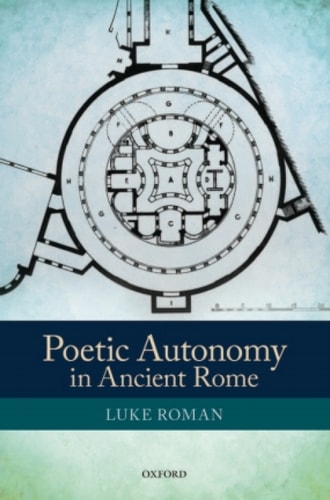
Poetic Autonomy in Ancient Rome
0
0
As an Amazon Associate and affiliate partner, Menrva Books earns from qualifying purchases. Learn more
Author Description
In Poetic Autonomy in Ancient Rome, Luke Roman offers a major new approach to the study of ancient Roman poetry. A key term in the modern interpretation of art and literature, 'aesthetic autonomy' refers to the idea that the work of art belongs to a realm of its own, separate from ordinary activities and detached from quotidian interests. While scholars have often insisted that aesthetic autonomy is an exclusively modern concept and cannot be applied to other historical periods, the book argues that poets in ancient Rome employed a 'rhetoric of autonomy' to define their position within Roman society and establish the distinctive value of their work. This study of the Roman rhetoric of poetic autonomy includes an examination of poetic self-representation in first-person genres from the late republic to the early empire. Looking closely at the works of Lucilius, Catullus, Propertius, Horace, Virgil, Tibullus, Ovid, Statius, Martial, and Juvenal, Poetic Autonomy in Ancient Rome affords fresh insight into ancient literary texts and reinvigorates the dialogue between ancient and modern aesthetics.
Menrva's Summary
THE THESIS
This book investigates whether the concept of aesthetic autonomy, traditionally viewed as a modern invention, can be applied to the literary practices of ancient Rome. Luke Roman, a scholar of classical literature, challenges the prevailing academic consensus that art in antiquity was entirely subservient to social and political utility. By analyzing the 'rhetoric of autonomy' used by Roman poets, he argues that these writers actively constructed a space for their work that claimed independence from the mundane concerns of Roman society.
THE SCOPE MAP
What You Will Find
- A theoretical framework defining the 'rhetoric of autonomy' in a classical context.
- Analysis of poetic self-representation across first-person literary genres.
- Comparative studies of major Roman poets including Catullus, Horace, Virgil, and Ovid.
Scope Limits
- The study focuses primarily on the late republic to the early empire period.
- It does not provide a comprehensive history of Roman political structures outside of their relation to literary production.
THE AUTHORITY PERSPECTIVE
Scholars recognize this work as a significant contribution to the field of classical aesthetics, particularly for its challenge to the historical boundaries of literary theory. Readers frequently note the academic density of the prose, which is intended for an audience familiar with Latin literature and critical theory.
Page Count:
400
Publication Date:
2014-01-01
Publisher:
OUP Oxford
ISBN-10:
0191663123
ISBN-13:
9780191663123
History
Poetry
Literary Criticism
Latin poetry
Ancient History
Aesthetics
Community Tags
Other Editions(2)

Similar Books