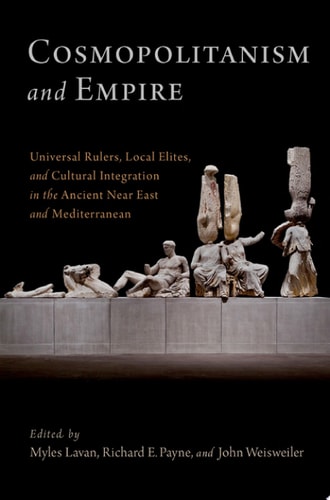
Cosmopolitanism and Empire
0
0
As an Amazon Associate and affiliate partner, Menrva Books earns from qualifying purchases. Learn more
Author Description
The Empires Of The Ancient Near East And Mediterranean Invented Cosmopolitan Politics. In The First Millennia Bce And Ce, A Succession Of Territorially Extensive States Incorporated Populations Of Unprecedented Cultural Diversity. Cosmopolitanism And Empire Traces The Development Of Cultural Techniques Through Which Empires Managed Difference In Order To Establish Effective, Enduring Regimes Of Domination. It Focuses On The Relations Of Imperial Elites With Culturally Distinct Local Elites, Offering A Comparative Perspective On The Varying Depth And Modalities Of Elite Integration In Five Empires Of The Ancient Near East And Mediterranean. If Cosmopolitanism Has Normally Been Studied Apart From The Imperial Context, The Essays Gathered Here Show That Theories And Practices That Enabled Ruling Elites To Transcend Cultural Particularities Were Indispensable For The Establishment And Maintenance Of Trans-regional And Trans-cultural Political Orders. As The First Cosmopolitans, Imperial Elites Regarded Ruling Over Culturally Disparate Populations As Their Vocation, And Their Capacity To Establish Normative Frameworks Across Cultural Boundaries Played A Vital Role In The Consolidation Of Their Power. Together With An Introductory Chapter Which Offers A Theory And History Of The Relationship Between Empire And Cosmopolitanism, The Volume Includes Case Studies Of Assyrian, Seleukid, Ptolemaic, Roman, And Iranian Empires That Analyze Encounters Between Ruling Classes And Their Subordinates In The Domains Of Language And Literature, Religion, And The Social Imaginary. The Contributions Combine To Illustrate The Dilemmas Of Difference That Imperial Elites Confronted As Well As Their Strategies For Resolving The Cultural Contradictions That Their Regimes Precipitated.
Menrva's Summary
THE THESIS
This volume investigates how ancient empires developed cosmopolitan political techniques to manage cultural diversity and maintain long-term imperial stability. The editors, John Weisweiler, Myles Lavan, and Richard E. Payne, curate a collection of scholarly essays that examine the intersection of imperial power and cultural integration. By analyzing the administrative and social strategies employed by ruling elites, the text argues that cosmopolitanism was not merely a cultural ideal but a functional necessity for governing trans-regional states.
THE SCOPE MAP
What You Will Find
- Comparative analysis of five major empires: Assyrian, Seleukid, Ptolemaic, Roman, and Iranian.
- Examination of elite integration strategies in the domains of language, literature, religion, and social identity.
- Theoretical framework connecting imperial expansion with the development of cosmopolitan political practices.
Scope Limits
- The analysis is restricted to the ancient Near East and Mediterranean regions.
- The text focuses primarily on elite-level interactions rather than the experiences of non-elite populations.
THE AUTHORITY PERSPECTIVE
Scholars in the field of ancient history and political theory recognize this work as a significant contribution to the study of imperial governance and cultural management. Readers frequently note the academic density of the prose and the rigorous comparative methodology applied across the diverse case studies.
Page Count:
432
Publication Date:
2016-01-01
Publisher:
Oxford University Press
ISBN-10:
0190465670
ISBN-13:
9780190465674
History
Sociology
Ancient History
Community Tags
Similar Books