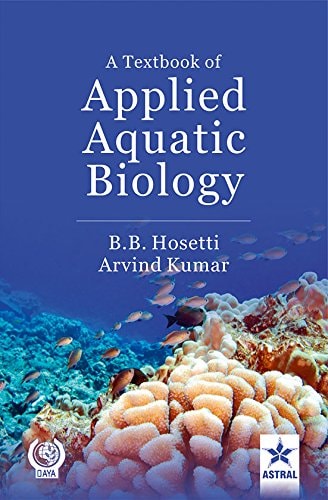
A Textbook of Applied Aquatic Biology
0
0
As an Amazon Associate and affiliate partner, Menrva Books earns from qualifying purchases. Learn more
Author Description
The book has been written covering applied aspects of hydrobiology in order to cater to the needs of students and teacher in Indian universities and colleges. A textbook of this kind will be of immense use of all those who study or teach a special course in aquatic biology or as part of their curriculum. To start with the book in order to explain the realtionship of the hydrosphere with other components of the ecosphere, a chapter on biosphere is incorporated as Chapter 1. Various physico-chemical properties of water and their interaction with the environmental factors and the responses of organisms to their physical environment are narrated in Chapters 2 and 3 respectively. During the 1990 s there was a mad race to convert the paddy field and mangrove swamps into aquaculture ponds to grow the tiger prawn and earn money along the both coasts of India, specially in Andhra Pradesh. The Coastal Zone Regulation Act 1992, posed stringent measures and the EIA was extended to aquaculture also. Now all the aquaculture ponds with more than 20 ha area are to be scrutinised by EIA before establishment. The importance of ecology and status of mangrove ecosystems of India is included in Chapter 4. Another important aspect of aquatic biology is study of interstitial and intertidal organisms. There is very meagre information available on these topics. With a view to discuss this the topics are dealt in Chapter 5 and 6. Another most fascinating avenue yielding field is pearl culture. In India aquaculture scientists are now producing indigenous pearls using modern techniques. Details about the pearl culture practised and its status is described in Chapter 7. Chapter 8 embodies infromation of drift animals and phytoplankters. Pollution problem is a global concern. The water pollutants, their impact, drinking water purification and water pollution abatement methods adopted in India and elsewhere are illustrated in Chapter 9. The author have carried out research on waste stabilization
Menrva's Summary
THE THESIS
This textbook investigates the applied aspects of hydrobiology to serve students and educators in Indian universities and colleges. The book begins by establishing the relationship between the hydrosphere and other ecosphere components with a chapter on the biosphere. Subsequent chapters detail the physico-chemical properties of water, their environmental interactions, and organismal responses to physical environments. It also addresses the ecological importance and status of India's mangrove ecosystems, information on interstitial and intertidal organisms, and details on pearl culture practices. Finally, it covers water pollutants, their impacts, drinking water purification, and water pollution abatement methods.
THE SCOPE MAP
- Biosphere: Relationship of the hydrosphere with other ecosphere components.
- Physico-chemical properties of water and their interaction with environmental factors.
- Responses of organisms to their physical environment.
- Ecology and status of mangrove ecosystems in India.
- Interstitial and intertidal organisms.
- Pearl culture practices and status in India.
- Drift animals and phytoplankters.
- Water pollutants, their impact, drinking water purification, and water pollution abatement methods.
THE AUTHORITY PERSPECTIVE
The book is structured to provide comprehensive coverage of applied hydrobiology, catering specifically to the needs of students and teachers within the Indian academic context. Its inclusion of topics such as mangrove ecosystems, pearl culture, and water pollution abatement methods reflects a focus on relevant environmental and economic issues in India. The detailed examination of water properties and organismal responses suggests a thorough approach to the subject matter. The text aims to be a valuable resource for those studying aquatic biology as a specialized course or as part of a broader curriculum.
Page Count:
393
Publication Date:
2001-01-01
Publisher:
Daya Publishing House
ISBN-10:
8170352398
ISBN-13:
9788170352396
Non-Fiction
Science
Ecology
Aquaculture
Hydrobiology
Water pollution
Community Tags
Similar Books