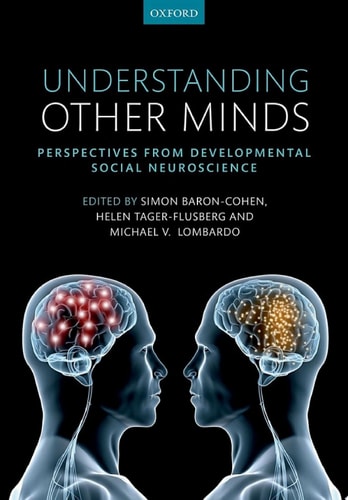
Understanding Other Minds: Perspectives from Developmental Social Neuroscience
0
0
As an Amazon Associate and affiliate partner, Menrva Books earns from qualifying purchases. Learn more
Author Description
This book comprises 26 exciting chapters by internationally renowned scholars, addressing the central psychological process separating humans from other animals: the ability to imagine the thoughts and feelings of others, and to reflect on the contents of our own mindsa theory of mind (ToM). The four sections of the book cover developmental, cultural, and neurobiological approaches to ToM across different populations and species. The chapters explore the earliest stages of development of ToM in infancy, and how plastic ToM learning is; why 3-year-olds typically fail false belief tasks and how ToM continues to develop beyond childhood into adulthood; the debate between simulation theory and theory theory; cross-cultural perspectives on ToM and how ToM develops differently in deaf children; how we use our ToM when we make moral judgments, and the link between emotional intelligence and ToM; the neural basis of ToM measured by evoked response potentials, functional magnetic resonance imaging, and studies of brain damage; emotional vs. cognitive empathy in neuropsychiatric conditions such as autism, schizophrenia, and psychopathy; the concept of self in autism and teaching methods targeting ToM deficits; the relationship between empathy, the pain matrix and the mirror neuron system; the role of oxytocin and fetal testosterone in mentalizing and empathy; the heritability of empathy and candidate single nucleotide polymorphisms associated with empathy; and ToM in non-human primates. These 26 chapters represent a masterly overview of a field that has deepened since the first edition was published in 1993.
Menrva's Summary
THE THESIS
This volume investigates the psychological and neurobiological mechanisms underlying Theory of Mind (ToM), the human capacity to attribute mental states to oneself and others. The editors, Helen Tager-Flusberg, Michael Lombardo, and Simon Baron-Cohen, curate contributions from international scholars to synthesize research across developmental, cultural, and biological domains. The text argues that understanding ToM requires an interdisciplinary framework that bridges infancy, adulthood, and various neuropsychiatric conditions.
THE SCOPE MAP
What You Will Find
- Developmental trajectories of ToM from infancy through adulthood
- Neurobiological methodologies including fMRI, ERP, and genetic studies
- Comparative analyses of ToM in non-human primates and cross-cultural populations
- Clinical applications regarding autism, schizophrenia, and psychopathy
Scope Limits
- The text does not provide a singular unified theory of mind but rather presents a collection of competing perspectives
- It does not offer clinical diagnostic tools for practitioners, focusing instead on theoretical and empirical research
THE AUTHORITY PERSPECTIVE
Experts recognize this volume as a comprehensive reference for the current state of social neuroscience research regarding mentalizing and empathy. Readers frequently note the academic density of the prose, making it most suitable for researchers and graduate-level students in the cognitive sciences.
Page Count:
516
Publication Date:
2013-01-01
Publisher:
OUP Oxford
ISBN-10:
019166880X
ISBN-13:
9780191668807
Psychology
Autism
Medical
Psychotherapy
Neuroscience
Allied Health
Developmental Psychology
Community Tags
Similar Books