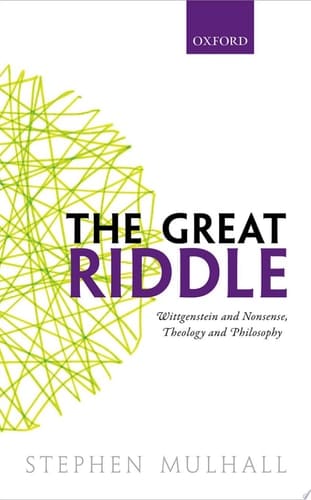
The Great Riddle: Wittgenstein and Nonsense, Theology and Philosophy
0
0
Author Description
Can We Talk Meaningfully About God? The Theological Movement Known As Grammatical Thomism Affirms That Religious Language Is Nonsensical, Because The Reality Of God Is Beyond Our Capacity For Expression. Stephen Mulhall Critically Evaluates The Claims Of This Movement (as Exemplified In The Work Of Herbert Mccabe And David Burrell) To Be A Legitimate Inheritor Of Wittgenstein's Philosophical Methods As Well As Aquinas's Theological Project. Stephen Mulhall. Includes Bibliographical References And Index. Mode Of Access: World Wide Web.
Menrva's Summary
THE THESIS
This book investigates whether the theological movement known as Grammatical Thomism can legitimately claim to inherit the philosophical methods of Ludwig Wittgenstein and the theological framework of Thomas Aquinas. Stephen Mulhall, a professor of philosophy, examines the intersection of linguistic analysis and religious discourse. He evaluates the assertion that religious language is inherently nonsensical due to the ineffability of God, contrasting this view with the rigorous logical structures proposed by Wittgenstein and the classical theological tradition of Aquinas.
THE SCOPE MAP
What You Will Find
- A critical analysis of Grammatical Thomism as a theological movement
- An examination of the works of Herbert McCabe and David Burrell
- A comparative study of Wittgensteinian linguistic philosophy and Thomistic theology
Scope Limits
- The text does not provide a general introduction to Wittgenstein's entire body of work
- It does not offer a comprehensive history of Thomism outside of the specific context of Grammatical Thomism
THE AUTHORITY PERSPECTIVE
Scholars and students of philosophy of religion frequently note the technical density of the prose, which requires a strong background in both analytic philosophy and scholastic theology. Experts highlight this as a significant contribution to the debate regarding the limits of language in religious expression.
Page Count:
0
Publication Date:
1900-01-01
Publisher:
Oxford University Press,
ISBN-10:
0191816620
ISBN-13:
9780191816628
Philosophy
Aquinas
Wittgenstein
Metaphysics
Theology
Community Tags
Similar Books