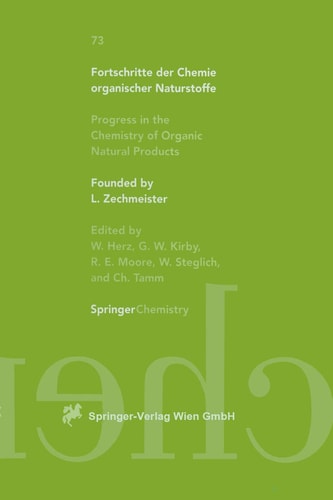
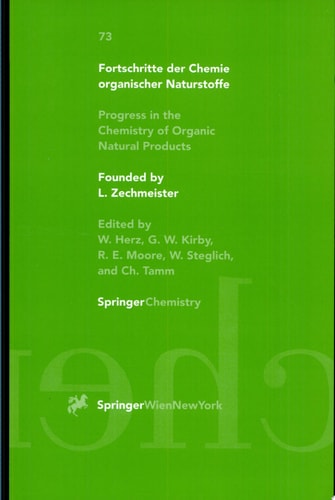
Fortschritte der Chemie organischer Naturstoffe / Progress in the Chemistry of Organic Natural Products
0
0
As an Amazon Associate and affiliate partner, Menrva Books earns from qualifying purchases. Learn more
Author Description
The Leguminosae is an economically important family in the Dicotyledonae with many cultivated species, e. g., beans and peas. The family also contains many well-known medicinal plants. It is composed of 17,000 or more species that constitute nearly one twelfth of the world's flowering plants (1). Traditionally the family has been divided into three subfamilies, Caesalpinioideae, Mimosoideae and Papilionoi- deae, which are sometimes recognized as separate families Caesalpinia- ceae, Mimosaceae and Papilionaceae. The International Code of Botanical Nomenclature permits alternative nomenclatures, the family names being replaced by Fabaceae, Fabales and Faboideae, and this usage will be common (2). Licorice (liquorice, kanzoh in Japanese, gancao in Chinese) is the name applied to the roots and stolons of some Glycyrrhiza species (Fabaceae) and has been used by human beings for at least 4000 years. The earliest written reference to the use of licorice is contained in the Codex Hammurabi dating from 2100 B. C., and the subsequent history in the West has been described in the earlier reviews (3-6). In the Far East, references to the effectiveness of licorice are contained in the "Shen Nong Ben Cao Jing", the first Chinese dispensatory whose original anonymous volumes probably appeared by the end of the third century (7, 8).
Menrva's Summary
THE THESIS
This volume investigates the chemistry of organic natural products, with a specific focus on the Leguminosae family and the medicinal properties of licorice. The Leguminosae family, comprising over 17,000 species, is of significant economic and medicinal importance, traditionally divided into subfamilies like Caesalpinioideae, Mimosoideae, and Papilionoideae, now often referred to as Fabaceae. Licorice, derived from Glycyrrhiza species within the Fabaceae family, has a documented history of human use spanning at least 4000 years, with early references found in the Codex Hammurabi and ancient Chinese dispensatories.
THE SCOPE MAP
- Detailed chemical analysis of compounds found in the Leguminosae family.
- Exploration of the historical and medicinal uses of licorice (Glycyrrhiza species).
- Discussion of botanical classification and nomenclature changes within the Leguminosae family (e.g., Fabaceae).
- Review of early written references to licorice use in both Western and Eastern traditions.
- Examination of the chemical constituents responsible for licorice's therapeutic effects.
- Contextualization of licorice within the broader pharmacopoeia of traditional medicine.
THE AUTHORITY PERSPECTIVE
This volume is part of the 'Fortschritte der Chemie organischer Naturstoffe / Progress in the Chemistry of Organic Natural Products' series, indicating a focus on detailed scientific research for specialists. The content, as suggested by the description, likely offers a deep dive into the chemical structures and properties of natural compounds, particularly those with medicinal applications. The inclusion of historical references suggests a comprehensive approach that bridges traditional knowledge with modern chemical analysis. The series itself is known for its in-depth reviews and contributions to the field of natural product chemistry.
Page Count:
162
Publication Date:
2012-10-14
Publisher:
Springer Vienna
ISBN-10:
3709173337
ISBN-13:
9783709173336
Science
Non-Fiction
Chemistry
Botany
Pharmacology
Community Tags
Other Editions(2)
Similar Books