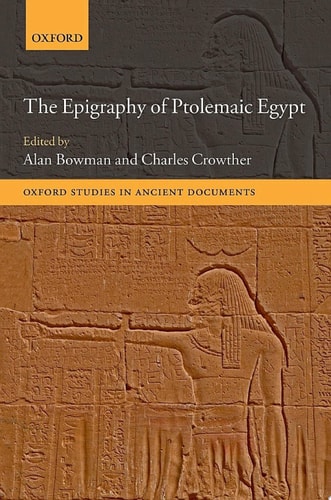
The Epigraphy of Ptolemaic Egypt
0
0
As an Amazon Associate and affiliate partner, Menrva Books earns from qualifying purchases. Learn more
Author Description
The Ptolemaic period in Egypt (332-30 BC) is one of the most well-documented periods of the Hellenistic age: in addition to the papyrological record there are more than 600 surviving Greek and Greek/Egyptian bilingual and trilingual inscriptions, ranging from massive public monuments, such as the Rosetta Stone, to small private dedications, funerary plaques, and metrical epigrams for the deceased. This volume offers a series of detailed studies of the historical and cultural contexts of these important inscriptions and is intended to complement the multi-volume Corpus of Ptolemaic Inscriptions edition, in which the Greek and Egyptian texts will be presented together for the first time. The subjects discussed in the twelve chapters range widely across a variety of sub-disciplines, from advances in new technologies of image-capture, the juxtaposition of Greek and Egyptian elements in the layout and iconography of the monuments, and the palaeography of the Greek texts, to the history of the acquisition and study of the great bilingual decrees voted by the priests of the indigenous Egyptian cults, the introduction of Greek civic administration and communal associations in the cities and villages, and the role of the military in monumental commemoration. Particular attention is given to the role of indigenous and Greek religious institutions in Alexandria and the towns and villages of the Nile Delta and Valley, in which commemorative dedications to divinities of temples and statues by the monarchs and by private individuals are numerous and prominent. In a period shaped by the interplay between Egyptian and Greek culture, the existence of public and private inscribed monuments was a vital element of dynastic control. The unique insights offered by this thorough examination of the epigraphical landscape of Ptolemaic Egypt are invaluable to understanding the ways in which the Greek immigrant rulers and population established and reinforced their social and cultural dominan
Menrva's Summary
THE THESIS
This volume investigates how the epigraphical record of Ptolemaic Egypt functions as a primary source for understanding the complex cultural and political interplay between Greek immigrant rulers and the indigenous Egyptian population. Authors Alan Bowman and Charles V. Crowther, both established scholars in the field of ancient documents, utilize a collection of over 600 Greek and bilingual inscriptions to construct a framework for interpreting the social, religious, and administrative structures of the period. By analyzing these monuments, the authors argue that public and private inscriptions were not merely decorative but served as essential tools for dynastic control and the reinforcement of cultural dominance.
THE SCOPE MAP
What You Will Find
- Analysis of over 600 Greek and bilingual Greek/Egyptian inscriptions.
- Examination of palaeography, iconography, and layout of monumental texts.
- Studies on the role of religious institutions and military commemoration in the Nile Delta and Valley.
- Discussions on the history of acquisition and modern study of major bilingual decrees.
Scope Limits
- The volume focuses specifically on the epigraphical record and does not provide a comprehensive history of the Ptolemaic dynasty.
- It serves as a companion to the Corpus of Ptolemaic Inscriptions rather than a standalone textbook for general readers.
THE AUTHORITY PERSPECTIVE
Experts in the field of Hellenistic studies recognize this volume as a critical scholarly resource for understanding the intersection of Greek and Egyptian administrative practices. Readers frequently note the academic density of the prose, which is intended for researchers and students of ancient history who require a specialized analysis of epigraphical evidence.
Page Count:
381
Publication Date:
2020-01-01
Publisher:
OUP Oxford
ISBN-10:
019189902X
ISBN-13:
9780191899027
History
English & College Success
English
Archaeology
Epigraphy
Ancient History
Egyptology
Inscriptions
Community Tags
Similar Books