Emperors and Ancestors: Roman Rulers and the Constraints of Tradition
0
0
As an Amazon Associate and affiliate partner, Menrva Books earns from qualifying purchases. Learn more
Author Description
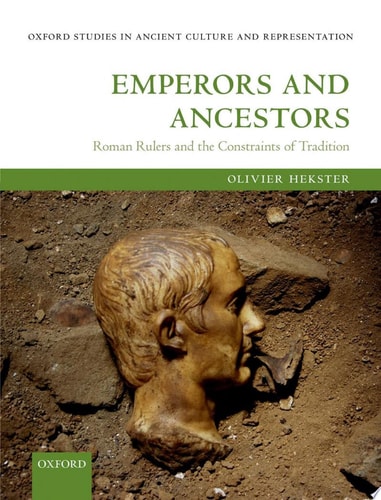
Ancestry played a continuous role in the construction and portrayal of Roman emperorship in the first three centuries AD. Emperors and Ancestors is the first systematic analysis of the different ways in which imperial lineage was represented in the various 'media' through which images of emperors could be transmitted. Looking beyond individual rulers, Hekster evaluates evidence over an extended period of time and differentiates between various types of sources, such as inscriptions, sculpture, architecture, literary text, and particularly central coinage, which forms the most convenient source material for a modern reconstruction of Roman representations over a prolonged period of time. The volume explores how the different media in use sent out different messages. The importance of local notions and traditions in the choice of local representations of imperial ancestry are emphasized, revealing that there was no monopoly on image-forming by the Roman centre and far less interaction between central and local imagery than is commonly held. Imperial ancestry is defined through various parallel developments at Rome and in the provinces. Some messages resonated outside the centre but only when they were made explicit and fitted local practice and the discourse of the medium. The construction of imperial ancestry was constrained by the local expectations of how a ruler should present himself, and standardization over time of the images and languages that could be employed in the 'media' at imperial disposal. Roman emperorship is therefore shown to be a constant process of construction within genres of communication, representation, and public symbolism.
Menrva's Summary
THE THESIS
This work investigates how Roman emperors utilized the concept of ancestry as a primary tool for political legitimacy and public representation during the first three centuries AD. Olivier Hekster, a scholar of Roman history, employs a comparative analysis of diverse media to demonstrate that imperial lineage was not a static fact but a constructed narrative. He argues that the presentation of ancestry was heavily mediated by local traditions and specific communication genres, challenging the notion of a centralized, monolithic imperial image.
THE SCOPE MAP
What You Will Find
- Analysis of imperial representation across inscriptions, sculpture, architecture, and literary texts.
- A detailed examination of coinage as a primary medium for disseminating imperial identity.
- Comparative study of central Roman messaging versus provincial reception and adaptation.
Scope Limits
- The study focuses primarily on the first three centuries AD and does not extend into the later Roman Empire.
- The analysis prioritizes the mechanics of representation over the personal biographies of individual rulers.
THE AUTHORITY PERSPECTIVE
Scholars recognize this volume as a significant contribution to the study of Roman political communication and the mechanics of imperial power. Readers frequently note the academic density of the prose and the rigorous methodology applied to the interpretation of material culture.
Page Count:
400
Publication Date:
2015-01-01
Publisher:
OUP Oxford
ISBN-10:
0191056553
ISBN-13:
9780191056550
History
Archaeology
Ancient - Rome
Emperors
Ancient History
Cultural History
Community Tags
Similar Books