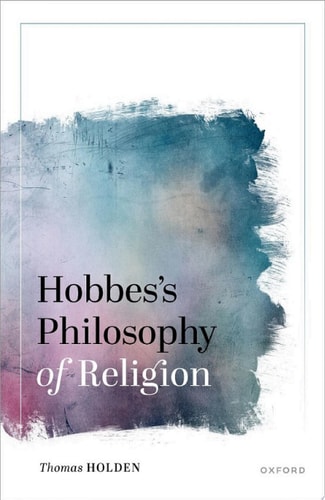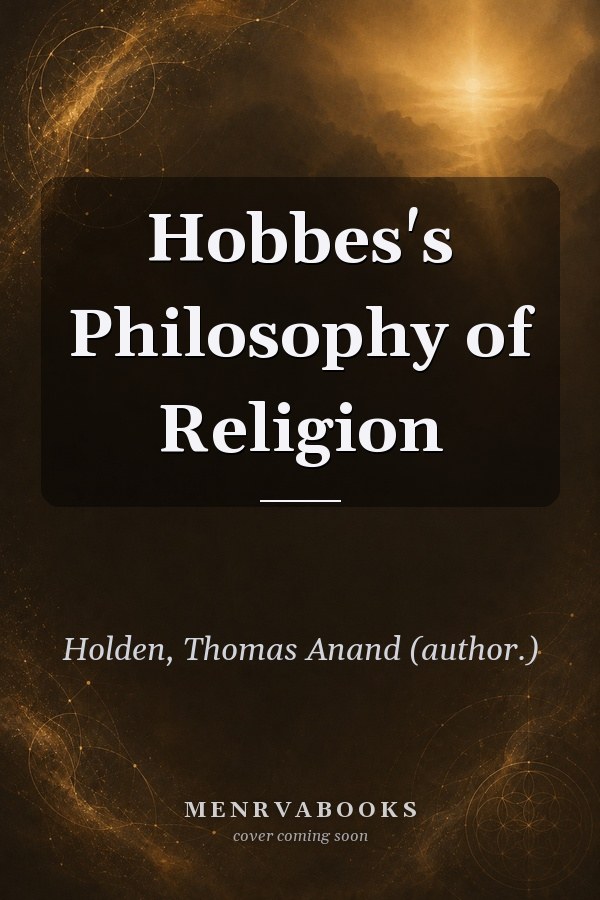
Hobbes's Philosophy of Religion
0
0
As an Amazon Associate and affiliate partner, Menrva Books earns from qualifying purchases. Learn more
Author Description
'Hobbes's Philosophy Of Religion' presents a new scholarly interpretation of Hobbes's treatment of religious speech and practice. It argues that the key to Hobbes's treatment of religion is his theory of religious language. According to Hobbes, the proper function of religious language is not to describe, state facts, or affirm truths. Instead, such talk ought only to express attitudes of honour, reverence, and humility before the incomprehensible great cause of nature. His theory valorises the traditional discourses of theism, natural religion, and revealed religion, but only as an expression of reverence without descriptive import. Hobbes is sincerely pious, rejecting atheism and irreligion. But he also rejects literal-minded theism, and any realist conception of the divine attributes. The book provides a comprehensive study of Hobbes's highly original treatment of religion.
Menrva's Summary
THE THESIS
This book investigates the core question of how Thomas Hobbes’s theory of religious language reconciles his apparent piety with his rejection of traditional realist theology. Thomas Holden, a scholar of early modern philosophy, utilizes a close textual analysis of Hobbes’s major works to argue that religious discourse for Hobbes functions as an expressivist tool rather than a descriptive one. By framing religious speech as a mechanism for expressing honor and reverence toward an incomprehensible deity, Holden provides a framework that resolves long-standing contradictions in Hobbesian scholarship.
THE SCOPE MAP
What You Will Find
- An expressivist interpretation of Hobbes’s treatment of divine attributes and actions.
- Analysis of Hobbes’s stance on cosmological and teleological arguments.
- Examination of the relationship between human language, naming, and the concept of an inconceivable God.
- Discussion of the psychological dimensions of religious practice, specifically love and fear.
Scope Limits
- The text does not provide a general biography of Thomas Hobbes.
- It does not focus on Hobbes’s political theory except where it intersects directly with his religious philosophy.
THE AUTHORITY PERSPECTIVE
Scholars view this work as a significant contribution to the study of early modern religious thought, particularly for its focus on the semantic dimensions of Hobbes’s philosophy. Readers frequently note the academic density of the prose, which is intended for an audience familiar with seventeenth-century philosophical debates.
Page Count:
0
Publication Date:
1900-01-01
Publisher:
Oxford University Press,
ISBN-10:
0191967637
ISBN-13:
9780191967634
Religion
Philosophy
Political Philosophy
Thomas Hobbes
Philosophy history
History of Ideas
Community Tags
Similar Books