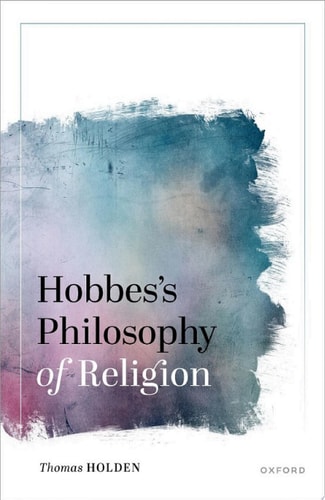
Hobbes's Philosophy of Religion
0
0
As an Amazon Associate and affiliate partner, Menrva Books earns from qualifying purchases. Learn more
Author Description
Hobbes's Philosophy of Religion presents a new scholarly interpretation of Hobbes's treatment of religious speech and practice. It argues that the key to Hobbes's treatment of religion is his theory of religious language. According to Hobbes, the proper function of religious language is not to describe, state facts, or affirm truths. Instead, such talk ought only to express attitudes of honour, reverence, and humility before the incomprehensible great cause of nature. His theory valorises the traditional discourses of theism, natural religion, and revealed religion, but only as an expression of reverence without descriptive import. Hobbes is sincerely pious, rejecting atheism and irreligion. But he also rejects literal-minded theism, and any realist conception of the divine attributes. The book provides a comprehensive study of Hobbes's highly original treatment of religion. It also offers an integrated account of Hobbes's philosophical thought around religious topics. The account brings out the connections between Hobbes's theoretical philosophy - including his philosophy of mind, language, and human nature - and his practical religious politics, including his views on religious toleration, ecclesiology, and the religious function of the civil state.
Menrva's Summary
THE THESIS
This work investigates the core question of how Thomas Hobbes’s theory of religious language reconciles his seemingly contradictory views on piety and the nature of the divine. Author Thomas Holden, a scholar of early modern philosophy, utilizes a rigorous analysis of Hobbes’s theoretical framework—specifically his philosophy of mind and language—to argue that Hobbes viewed religious discourse as a performative expression of reverence rather than a descriptive account of factual truths. By integrating these linguistic theories with Hobbes’s political writings, Holden presents a cohesive interpretation of how the philosopher navigated the tensions between civil authority and religious practice.
THE SCOPE MAP
What You Will Find
- An analysis of Hobbes’s theory of religious language and its function in society.
- An integrated account connecting Hobbes’s philosophy of mind and human nature to his ecclesiology.
- Examination of Hobbes’s stance on religious toleration and the role of the civil state in religious life.
Scope Limits
- The text does not provide a general biography of Thomas Hobbes.
- It does not offer a broad survey of 17th-century religious history outside the context of Hobbes’s specific philosophical system.
THE AUTHORITY PERSPECTIVE
Scholars frequently cite this work as a significant contribution to the study of Hobbes’s religious thought, noting its success in bridging the gap between his theoretical philosophy and his political writings. Experts highlight the text for its analytical clarity and its ability to provide a nuanced, non-reductive reading of Hobbes’s complex views on theism.
Page Count:
233
Publication Date:
2023-01-01
Publisher:
OUP Oxford
ISBN-10:
0192699156
ISBN-13:
9780192699152
Philosophy
Religion
Political Philosophy
Philosophy history
Thomas Hobbes
Community Tags
Similar Books