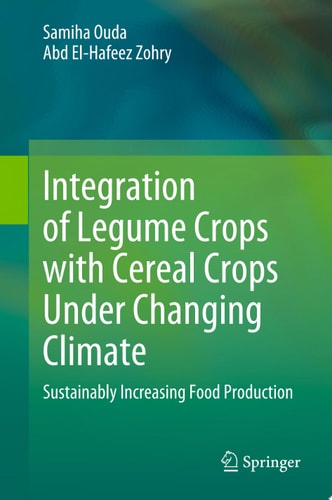
Integration of Legume Crops with Cereal Crops Under Changing Climate
0
0
As an Amazon Associate and affiliate partner, Menrva Books earns from qualifying purchases. Learn more
Author Description
The world population is steadily increases with high rate in the past decade from 7,126 billion inhibitors in 2012 to 8,095 billion inhibitors in 2024, with 14% increase. In the meantime, the number of severely food insecure people were 604.5 million in 2014, which increased by 53% in 2020 to reach 927.6 million people. These numbers raise large concerns about the future of food production to feed these continually growing population. Lately, many developing countries rely on importing large quantities of crops, such as wheat, maize, and rice to meet their food and feed needs. The negative impact of climate change and its consequences, namely high temperature causing low crops productivity and water scarcity, which causing great disruptions in food production systems. Therefore, increasing the production of cereal crops worldwide can be achieved through increasing average yield per unit area or expanding the area devoted to cereals into more marginal lands. Moreover, breeding for more resilient cultivars, which can release its potential yield could play an important role in increasing total production under the adverse growth conditions. Inclusion of legume crops, such as soybean, peanut, and cowpea in cereal-based cropping systems is a viable strategy to increase production of cereal crops. It also helps in reducing the use of chemical fertilizer. It has been reported that intercropping legume crops with cereal crops can increase the productivity of both crops. Additionally, an increase in soil nitrogen, phosphorus and potassium has been also reported when legume crops were included in cereal-based cropping system. It has been also reported that inclusion of legume crops increases the soil water-holding capacity and water used efficiency. Thus, inclusion of legume crops in cereal-based cropping systems can increase its productivity, as well as attains the sustainable use of soil and water resources. In this book, we will thoroughly tackle the benefits of the integr
Menrva's Summary
THE THESIS
The integration of legume crops into cereal-based systems offers a sustainable solution to increasing global food production amidst climate change challenges. The book addresses the escalating global population and the concurrent rise in food insecurity, exacerbated by climate change impacts like high temperatures and water scarcity. It posits that incorporating legumes such as soybean, peanut, and cowpea into cereal cropping systems can significantly boost cereal yields, reduce reliance on chemical fertilizers, and improve soil health by increasing nitrogen, phosphorus, and potassium levels. Furthermore, the text explores how this integration enhances soil water-holding capacity and water use efficiency, contributing to the sustainable management of soil and water resources.
THE SCOPE MAP
- Analysis of global population growth and its impact on food security.
- Examination of climate change effects on crop productivity, including high temperatures and water scarcity.
- Strategies for increasing cereal crop production through yield enhancement and cultivation on marginal lands.
- The role of breeding resilient cultivars for adverse growth conditions.
- Benefits of intercropping legume crops with cereals, including increased productivity of both crop types.
- Impact of legume inclusion on soil nutrient levels (nitrogen, phosphorus, potassium).
- Enhancement of soil water-holding capacity and water use efficiency through legume integration.
- Discussion on achieving sustainable use of soil and water resources via legume-cereal cropping systems.
THE AUTHORITY PERSPECTIVE
This book addresses critical issues in global agriculture and food security, particularly in the context of a changing climate. Its focus on the integration of legume crops into cereal systems suggests a practical, science-based approach to enhancing crop yields and promoting sustainable farming practices. The detailed examination of soil health benefits and resource management indicates a text aimed at researchers, agronomists, and policymakers seeking evidence-based solutions for agricultural challenges.
Page Count:
197
Publication Date:
2024-09-02
Publisher:
Springer Nature
ISBN-10:
3031681029
ISBN-13:
9783031681028
Science
Non-Fiction
Climate Change
Agriculture
Food security
Agronomy
Community Tags
Similar Books



Reader Comments
Share Your Thoughts
No comments yet. Be the first to share your thoughts!