Pythium
0
0
As an Amazon Associate and affiliate partner, Menrva Books earns from qualifying purchases. Learn more
Author Description
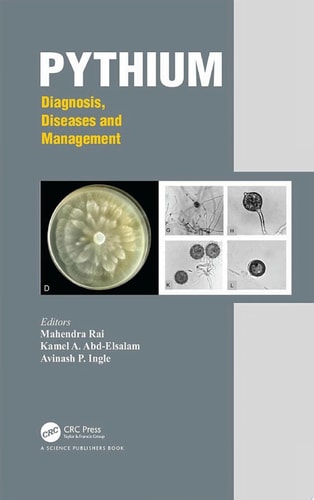
Pythium is one of the most important phytopathogens causing significant damage to agriculture, forest, and nurseries, etc. It is an unseen enemy of the root zone of various plants and hence considered as "hidden terror" for a number of plants. An accurate diagnosis and identification of Pythium causing various infections in plants is very important because it is often confused with several other fungi. Pythium infections are difficult to control once they have set in. Therefore, its effective and ecofriendly management is of paramount importance. In addition, there are many reports on Pythium causing infections in human beings and animals. The present book on Pythium focuses on various aspects which mainly include pathogenesis, technological developments in detection and diagnosis, and its management. Key Features Includes identification of Pythium spp. by traditional and molecular methods Deals with different diseases caused by Pythium spp Describes the role of Pythium in mammalian diseases Incorporates various management strategies Discusses emerging role of nanotechnological tools for the management of Pythium diseases
Menrva's Summary
THE THESIS
Pythium represents a significant, often unseen threat to global agriculture and other ecosystems, causing widespread damage that is difficult to control once established. This book addresses the critical need for accurate diagnosis and identification of Pythium species, which are frequently mistaken for other fungi. It explores the pathogenesis of Pythium, detailing its role as a phytopathogen and its impact on various plants, as well as its less commonly known infections in humans and animals. The work also focuses on technological advancements in detection, diagnosis, and management strategies, including emerging nanotechnological tools.
THE SCOPE MAP
- Identification of Pythium species using both traditional and molecular methods.
- Detailed descriptions of various diseases caused by Pythium species in plants.
- Exploration of Pythium's role in causing infections in mammalian hosts.
- Comprehensive coverage of diverse management strategies for Pythium diseases.
- Discussion on the application of nanotechnological tools for Pythium disease management.
THE AUTHORITY PERSPECTIVE
This book is presented as a focused scientific text addressing the multifaceted challenges posed by Pythium. The content emphasizes practical applications in diagnosis and management, suggesting it is aimed at researchers, agricultural professionals, and students in mycology and plant pathology. The inclusion of both traditional and molecular identification methods, alongside discussions on nanotechnological tools, indicates a comprehensive and up-to-date approach to the subject matter.
Page Count:
392
Publication Date:
2020-01-28
Publisher:
Taylor & Francis
ISBN-10:
1000733378
ISBN-13:
9781000733372
Science
Non-Fiction
Mycology
Plant Pathology
Agriculture
Community Tags
Similar Books