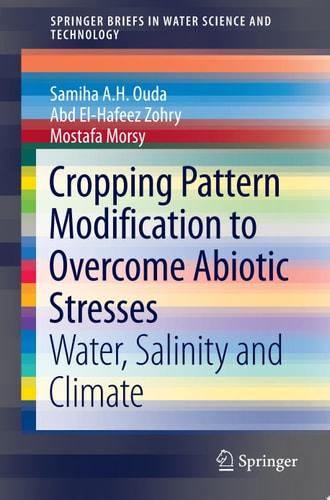
Cropping Pattern Modification to Overcome Abiotic Stresses
0
0
As an Amazon Associate and affiliate partner, Menrva Books earns from qualifying purchases. Learn more
Author Description
This book provides state-of-the art analysis, never done before in Egypt, on agro-climatic zones level. This study deals with how the national cropping pattern can be modified to overcome abiotic stresses, such as water scarcity, induced salinity and climate change to reduce their negative effects on food production. To this end, different cropping patterns are suggested. This study can be a framework for other developing countries to be used in quantifying and filling the gap in their knowledge about practices that can help in increasing their food security through increasing food production. Furthermore, the study is useful for policy makers to help them in their future plans and policies.
Menrva's Summary
THE THESIS
This book investigates how to modify national cropping patterns to mitigate the impacts of abiotic stresses on food production in Egypt. The study, conducted at the agro-climatic zones level, addresses critical challenges such as water scarcity, induced salinity, and climate change. It proposes different cropping patterns as solutions and offers a framework for other developing countries to enhance food security by increasing food production. The research also serves as a valuable resource for policymakers in their future planning and policy development.
THE SCOPE MAP
- Analysis of agro-climatic zones in Egypt.
- Strategies for modifying cropping patterns to overcome abiotic stresses.
- Assessment of water scarcity impacts on agriculture.
- Evaluation of induced salinity effects on crop yields.
- Adaptation measures for climate change in agriculture.
- Recommendations for increasing food production and security.
- Framework for application in other developing countries.
- Guidance for policymakers on agricultural planning.
THE AUTHORITY PERSPECTIVE
This study is presented as a novel analysis of Egypt's agro-climatic zones, offering practical solutions for enhancing food production amidst environmental challenges. The research aims to provide actionable insights for both agricultural practitioners and policymakers. Its framework is intended to be adaptable for other developing nations facing similar issues of water scarcity, salinity, and climate change. The work is positioned as a significant contribution to food security initiatives.
Page Count:
111
Publication Date:
2017-10-25
Publisher:
Springer Nature
ISBN-10:
331969880X
ISBN-13:
9783319698809
Non-Fiction
Science
Climate Change
Agronomy
Food security
Agriculture
Community Tags
Similar Books














