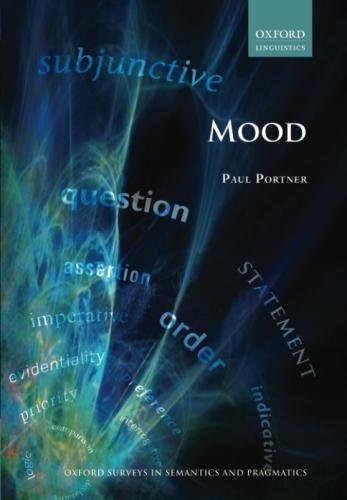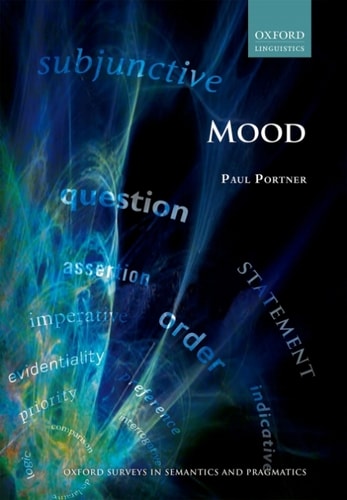
Mood
0
0
As an Amazon Associate and affiliate partner, Menrva Books earns from qualifying purchases. Learn more
Author Description
This book presents the essential background for understanding semantic theories of mood. Mood as a category is widely used in the description of languages and the formal analysis of their grammatical properties. It typically refers to the features of a sentence-individual morphemes or grammatical patterns-that reflect how the sentence contributes to the modal meaning of a larger phrase, or that indicate the type of fundamental pragmatic function that it has in conversation. In this volume, Paul Portner discusses the most significant semantic theories relating to the two main subtypes of mood: verbal mood, including the categories of indicative and subjunctive subordinate clauses, and sentence mood, encompassing declaratives, interrogatives, and imperatives. He evaluates those theories, compares them, and draws connections between seemingly disparate approaches, and he formalizes some of the literature's most important ideas in new ways in order to draw out their most significant insights. Ultimately, this work shows that there are crucial connections between verbal mood and sentence mood which point the way towards a more general understanding of how mood works and its relation to other topics in linguistics; it also outlines the type of semantic and pragmatic theory which will make it possible to explain these relations. The book will be a valuable resource for researchers and students from advanced undergraduate level upwards in the fields of semantics and pragmatics, philosophy, computer science, and psychology.
Menrva's Summary
THE THESIS
This volume investigates the formal semantic and pragmatic properties of mood, seeking to unify the understanding of verbal and sentence-level mood categories. Paul Portner, a specialist in formal semantics, synthesizes existing theoretical frameworks to explain how grammatical markers contribute to the modal meaning and pragmatic function of utterances. He evaluates competing theories and proposes new formalizations to demonstrate the underlying connections between indicative, subjunctive, declarative, interrogative, and imperative forms.
THE SCOPE MAP
What You Will Find
- Comparative analysis of verbal mood subtypes including indicative and subjunctive clauses
- Examination of sentence mood categories such as declaratives, interrogatives, and imperatives
- Formal semantic models for interpreting grammatical mood markers
- Theoretical synthesis connecting disparate linguistic approaches to modality
Scope Limits
- Does not provide an exhaustive survey of every language's specific mood system
- Focuses primarily on formal semantic and pragmatic theory rather than descriptive typology
THE AUTHORITY PERSPECTIVE
Experts recognize this text as a foundational resource for advanced students and researchers in linguistics and philosophy. Readers frequently note the academic density of the prose, which requires a strong background in formal logic and semantic theory to fully grasp the proposed models.
Page Count:
320
Publication Date:
2018-01-01
Publisher:
OUP Oxford
ISBN-10:
0192515004
ISBN-13:
9780192515001
English
English & College Success
Philosophy of
Linguistics
Pragmatics
Semantics
Grammar