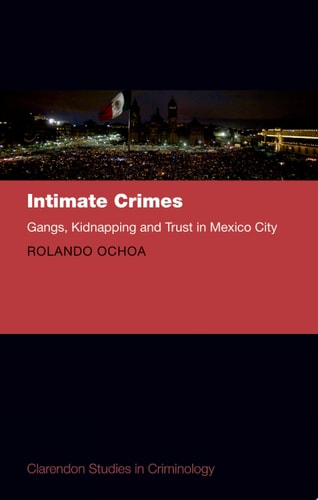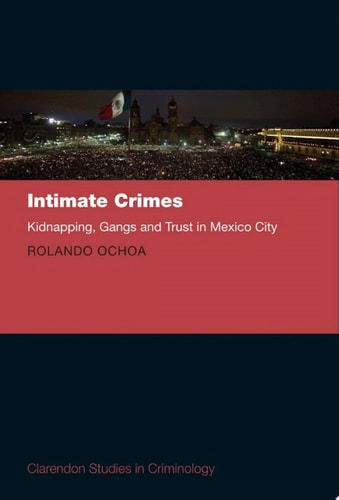
Intimate Crimes: Kidnapping, Gangs, and Trust in Mexico City
0
0
As an Amazon Associate and affiliate partner, Menrva Books earns from qualifying purchases. Learn more
Author Description
Mexico has one of the highest kidnapping rates in the world. Intimate Crimes outlines the history of kidnapping in Mexico City by constructing a narrative of this crime based on extensive qualitative research on gangs, policing and other crime-related policies. The book also analyses the effect of kidnapping - and crime more broadly - on how communities experience the city, as well as the strategies put in place by potential kidnapping victims to deal with the threat of being victimised by someone close to them, a common occurrence in Mexico City, including analysing the processes through which household employees are screened and selected in Mexican households. The book presents the results of over a year of fieldwork in Mexico, and creates a qualitative database of news reports for the material used in its writing. It includes material from over 70 interviews with kidnapping victims, their families, potential victims and their employees, police, prosecutors, government agents, journalists and other informants. Intimate Crimes contributes to existing criminological literature on Mexico and Latin America by making an important contribution to a subject of the outmost regional importance. The book also contributes to broader criminological topics on the rule of law, criminal gangs, policing and the impact of economic development on crime. It also builds on the existing literature on empirical work on trust and signalling, particularly as it relates to contexts of weak rule of law and low state protection.
Menrva's Summary
THE THESIS
This book investigates the prevalence and social mechanics of kidnapping in Mexico City, specifically focusing on how the threat of abduction by acquaintances shapes urban life and household security. Rolando Ochoa utilizes over a year of intensive fieldwork and a qualitative database of news reports to examine the intersection of criminal gangs, policing, and state policy. The author argues that in environments characterized by weak rule of law, trust and signaling become primary mechanisms for survival and risk mitigation among residents.
THE SCOPE MAP
What You Will Find
- Analysis of kidnapping trends and criminal gang operations in Mexico City
- Examination of household security strategies and employee screening processes
- Qualitative data derived from over 70 interviews with victims, law enforcement, and journalists
- Theoretical application of trust and signaling frameworks in low-protection environments
Scope Limits
- The study is geographically confined to Mexico City and does not provide a comprehensive analysis of all Mexican states
- The research focuses primarily on qualitative social dynamics rather than broad quantitative statistical modeling
THE AUTHORITY PERSPECTIVE
Scholars and criminologists recognize this text as a significant empirical contribution to the study of crime in Latin America. Readers frequently note the depth of the qualitative interviews, which provide a nuanced look at the sociological impact of systemic insecurity.
Page Count:
227
Publication Date:
2019-01-01
Publisher:
OUP Oxford
ISBN-10:
0192519425
ISBN-13:
9780192519429
Professional Career & Trade
Criminology
Urban Studies
Law Enforcement
Sociology
Mexico