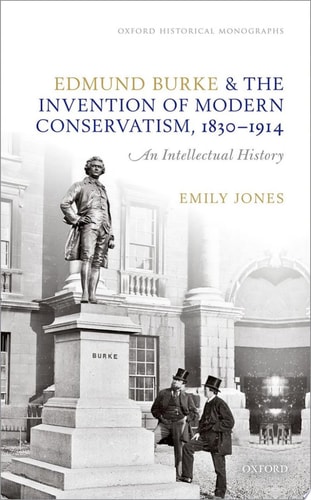
Edmund Burke and the Invention of Modern Conservatism, 1830-1914: An Intellectual History
0
0
As an Amazon Associate and affiliate partner, Menrva Books earns from qualifying purchases. Learn more
Author Description
Between 1830 And 1914 In Britain A Dramatic Modification Of The Reputation Of Edmund Burke (1730-1797) Occurred. Burke, An Irishman And Whig Politician, Is Now Most Commonly Known As The 'founder Of Modern Conservatism' - An Intellectual Tradition Which Is Also Deeply Connected To The Identity Of The British Conservative Party. The Idea Of 'burkean Conservatism' - A Political Philosophy Which Upholds 'the Authority Of Tradition', The Organic, Historic Conception Of Society, And The Necessity Of Order, Religion, And Property - Has Been Incredibly Influential Both In International Academic Analysis And In The Wider Political World. This Is A Highly Significant Intellectual Construct, But Its Origins Have Not Yet Been Understood. Emily Jones Demonstrates, For The First Time, That The Transformation Of Burke Into The 'founder Of Conservatism' Was In Fact Part Of Wider Developments In British Political, Intellectual, And Cultural History In The Nineteenth And Early Twentieth Centuries. Drawing From A Wide Range Of Sources, Including Political Texts, Parliamentary Speeches, Histories, Biographies, And Educational Curricula, Edmund Burke And The Invention Of Modern Conservatism Shows How And Why Burke's Reputation Was Transformed Over A Formative Period Of British History. In Doing So, It Bridges The Significant Gap Between The History Of Political Thought As Conventionally Understood And The History Of The Making Of Political Traditions. The Result Is To Demonstrate That, By 1914, Burke Had Been Firmly Established As A 'conservative' Political Philosopher And Was Admired And Utilized By Political Conservatives In Britain Who Identified Themselves As His Intellectual Heirs. This Was One Essential Component Of A Conscious Re-working Of C/conservatism Which Is Still At Work Today.
Menrva's Summary
THE THESIS
This book investigates the historical process by which the eighteenth-century Whig politician Edmund Burke was retrospectively constructed as the foundational figure of modern conservatism between 1830 and 1914. Emily Jones, a scholar of British political and intellectual history, utilizes a diverse array of primary sources to challenge the assumption that Burke’s status as a conservative icon was inherent or immediate. She argues that this transformation was a deliberate, multi-faceted project shaped by the evolving political, cultural, and educational landscape of nineteenth-century Britain. By tracing these shifts, Jones reveals how political traditions are manufactured and maintained over time.
THE SCOPE MAP
What You Will Find
- Analysis of British political discourse, parliamentary records, and biographical literature from 1830 to 1914.
- Examination of educational curricula and their role in canonizing political thought.
- A methodological bridge between the history of political ideas and the history of political identity formation.
Scope Limits
- The study focuses specifically on the British context and does not provide an exhaustive analysis of Burke’s reception in other nations.
- The narrative concludes in 1914 and does not track the evolution of Burkean thought through the entirety of the twentieth century.
THE AUTHORITY PERSPECTIVE
Scholars and historians recognize this work as a rigorous contribution to the study of political tradition-making and the history of ideas. Readers frequently note the academic density of the prose, which provides a detailed and nuanced account of how political reputations are curated for contemporary utility.
Page Count:
288
Publication Date:
2017-01-01
Publisher:
Oxford University Press, Incorporated
ISBN-10:
0192520083
ISBN-13:
9780192520081
History
British History
Political Philosophy
Conservatism
Intellectual History
Community Tags
Other Editions(3)
Similar Books
Reader Comments
Share Your Thoughts
No comments yet. Be the first to share your thoughts!