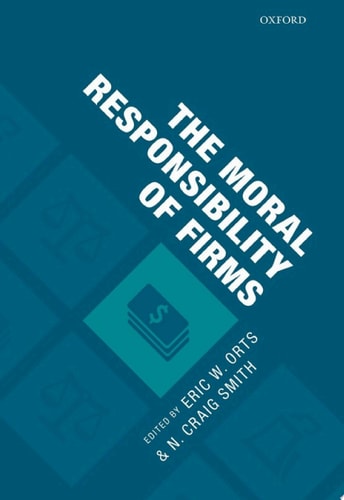
The Moral Responsibility of Firms
0
0
As an Amazon Associate and affiliate partner, Menrva Books earns from qualifying purchases. Learn more
Author Description
Individuals are generally considered morally responsible for their actions. Who or what is responsible when those individuals become part of business organizations? Can we correctly ascribe moral responsibility to the organization itself? If so, what are the grounds for this claim and to what extent do the individuals also remain morally responsible? If not, does moral responsibility fall entirely to specific individuals within the organization and can they be readily identified? A perennial question in business ethics has concerned the extent to which business organizations can be correctly said to have moral responsibilities and obligations. In philosophical terms, this is a question of "corporate moral agency." Whether firms can be said to be moral agents and to have the capacity for moral responsibility has significant practical consequences. In most legal systems in the world, business firms are recognized as "persons" with the ability to own property, to maintain and defend lawsuits, and to self-organize governance structures. To recognize that these "business persons" can also act morally or immorally as organizations, however, would justify the imposition of other legal constraints and normative expectations on organizations. In the criminal law, for example, the idea that an organized firm may itself have criminal culpability is accepted in many countries (such as the United States) but rejected in others (such as Germany). This book collects new contributions by leading business scholars in business ethics, philosophy, and related disciplines to extend our understanding of the "moral responsibility of firms."
Menrva's Summary
THE THESIS
This book investigates the philosophical and practical question of whether business organizations can function as moral agents with inherent responsibilities. Editors Eric W. Orts and N. Craig Smith compile contributions from experts in business ethics, philosophy, and law to examine the tension between individual accountability and corporate culpability. The text evaluates whether legal personhood should extend to moral personhood, analyzing the implications for governance, criminal law, and normative expectations within global business systems.
THE SCOPE MAP
What You Will Find
- Philosophical frameworks regarding corporate moral agency
- Comparative analysis of legal systems regarding corporate criminal culpability
- Interdisciplinary perspectives from business scholars and ethicists
- Discussions on the intersection of organizational structure and individual duty
Scope Limits
- Does not provide a singular, unified theory of corporate ethics
- Does not cover specific industry-wide compliance manuals or internal corporate policy guides
THE AUTHORITY PERSPECTIVE
Experts identify this collection as a significant contribution to the ongoing academic debate surrounding corporate moral agency. Readers frequently note the high level of philosophical rigor and the utility of the comparative legal analysis provided by the contributors.
Page Count:
245
Publication Date:
2017-01-01
Publisher:
OUP Oxford
ISBN-10:
0192520563
ISBN-13:
9780192520562
Philosophy
Business Ethics
Law
Corporate governance
Professional Responsibility
Management
Community Tags
Other Editions(4)

Similar Books
Reader Comments
Share Your Thoughts
No comments yet. Be the first to share your thoughts!