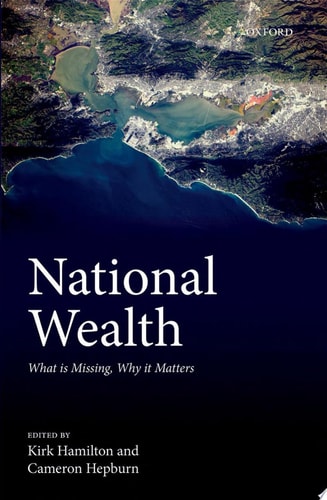
National Wealth: What Is Missing, Why It Matters
0
0
As an Amazon Associate and affiliate partner, Menrva Books earns from qualifying purchases. Learn more
Author Description
Why Are Some Nations Wealthy And Others Poor? How Did The Wealthy Nations Become Rich? What Are The Components Of Wealth? How Should Nations Manage Their Wealth For The Future? These Are Among The Most Important Questions In Economics. They Are Also Impossible To Answer Without Defining Wealth, And Understanding How It Can Be Created, Destroyed, Stored, And Managed. National Wealth: What Is Missing, Why It Matters Assembles A Collection Of High-quality Contributions To Define The Key Concepts And Address The Economic And Policy Issues Around National Wealth. It Considers Insights From Economic History, Addresses The Impacts Of The Changes To National Accounting, And Teases Out The Policy Implications For Both Rich And Poor Countries And The Institutions Within Them. Using Expert Analysis And Theory Backed By Empirical Work, This Book Evaluates The Progress That Has Been Made In Measuring National Wealth, As Well As The Recent Developments In Theory And Practice Which Tell Us That The Change In Real Wealth (net Saving) Is An Essential Indicator Of Economic Progress. Net National Saving, Measured Comprehensively And Adjusted To Reflect The Investment In And The Depreciation Of The Full Range Of Assets Measured In National Wealth, Is An Indicator Of The Change In Future Wellbeing. Governments Can Use This Measure To Answer A Fundamental Question: How Much Does The Stream Of Future Wellbeing Of The Population Rise Or Fall As A Result Of Policy Actions Today? The Book Is Organized Into Four Parts. Part One Provides The Political Context And Defines The Key Concepts. Part Two Examines The History Of Wealth Creation And Destruction. Part Three Provides A More Detailed Analysis Of The Individual Components Of Wealth, And Finally, Part Four Examines The Lessons For Managing Wealth For Sustainable National Prosperity.
Menrva's Summary
THE THESIS
This book investigates the fundamental components of national wealth and how the measurement of net saving serves as a critical indicator for long-term economic prosperity. Editors Cameron Hepburn and Kirk Hamilton, both established experts in environmental and development economics, curate a collection of scholarly contributions that synthesize economic history, national accounting theory, and empirical policy analysis. The text argues that traditional economic metrics are insufficient and that a comprehensive accounting of assets is necessary to determine if policy actions increase or decrease the future wellbeing of a population.
THE SCOPE MAP
What You Will Find
- A comprehensive framework for defining and measuring national wealth beyond GDP.
- Analysis of the relationship between net national saving and future economic sustainability.
- Historical perspectives on the processes of wealth creation and destruction.
- Policy implications for both developed and developing nations regarding asset management.
Scope Limits
- The text does not provide a singular, universal policy manual for all nations, as it focuses on theoretical and conceptual frameworks.
- It does not cover microeconomic consumer behavior, focusing instead on national-level accounting and institutional policy.
THE AUTHORITY PERSPECTIVE
Experts recognize this volume as a significant contribution to the field of national accounting and sustainable development. Readers frequently note the academic density of the prose, which is intended for policymakers, economists, and advanced students of economic theory.
Page Count:
504
Publication Date:
2017-01-01
Publisher:
Oxford University Press
ISBN-10:
0192529080
ISBN-13:
9780192529084
Economics
Public Policy
Macroeconomics
Economic History
Community Tags
Other Editions(2)
Similar Books


Reader Comments
Share Your Thoughts
No comments yet. Be the first to share your thoughts!