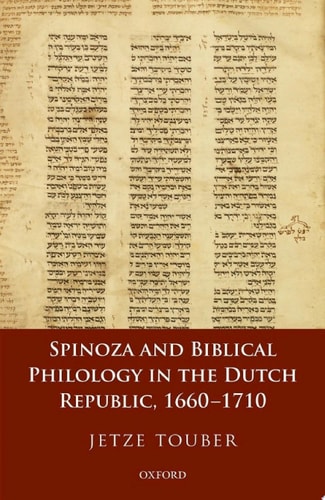
Spinoza and Biblical Philology in the Dutch Republic, 1660-1710
0
0
As an Amazon Associate and affiliate partner, Menrva Books earns from qualifying purchases. Learn more
Author Description
Spinoza and Biblical Philology in the Dutch Republic, 1660-1710 investigates the biblical criticism of Spinoza from the perspective of the Dutch Reformed society in which the philosopher lived and worked. It focuses on philological investigation of the Bible: its words, language, and the historical context in which it originated. Jetze Touber expertly charts contested issues of biblical philology in mainstream Dutch Calvinism to determine if Spinoza's work on the Bible had bearing on the Reformed understanding of the way society should handle Scripture. Spinoza has received considerable attention both in and outside academia. His unconventional interpretation of the Old Testament passages has been examined repeatedly during the past decades. So has that of fellow 'radicals' (rationalists, radicals, deists, libertines, and enthusiasts), against the backdrop of a society that is assumed to have been hostile, overwhelmed, static, and uniform. Touber counteracts this perspective and considers how the Dutch Republic used biblical philology and biblical criticism, including that of Spinoza. In doing so, Touber takes into account the highly neglected area of the Dutch Reformed ministry and theology of the Dutch Golden Age. The study concludes that Spinoza--rather than simply pushing biblical scholarship in the direction of modernity--acted in an indirect way upon ongoing debates, shifting trends in those debates, but not always in the same direction, and not always equally profoundly at all times, on all levels.
Menrva's Summary
THE THESIS
This study investigates how Baruch Spinoza's biblical criticism interacted with the intellectual and theological framework of the Dutch Reformed society between 1660 and 1710. Jetze Touber, a scholar of early modern intellectual history, utilizes primary source analysis of Dutch Reformed ministry and theological texts to challenge the assumption that Spinoza's work existed in a vacuum of hostility. The author argues that Spinoza's influence on biblical philology was nuanced and indirect, functioning as a catalyst within existing debates rather than a singular force for modernization.
THE SCOPE MAP
What You Will Find
- Analysis of Dutch Reformed theological responses to biblical criticism.
- Examination of philological methods applied to the Bible during the Dutch Golden Age.
- Contextualization of Spinoza's work alongside contemporary rationalists, deists, and libertines.
Scope Limits
- The study does not provide a comprehensive biography of Spinoza.
- It does not cover the reception of Spinoza's work outside of the Dutch Republic.
THE AUTHORITY PERSPECTIVE
Scholars recognize this work as a significant contribution to the study of the Dutch Golden Age, specifically for its focus on the often-overlooked role of the Reformed ministry. Experts highlight the text's ability to provide a more complex, less binary view of the relationship between radical philosophy and mainstream religious thought.
Page Count:
336
Publication Date:
2018-01-01
Publisher:
OUP Oxford
ISBN-10:
0192527193
ISBN-13:
9780192527196
Philosophy
History
Religion
Bibles
Intellectual History