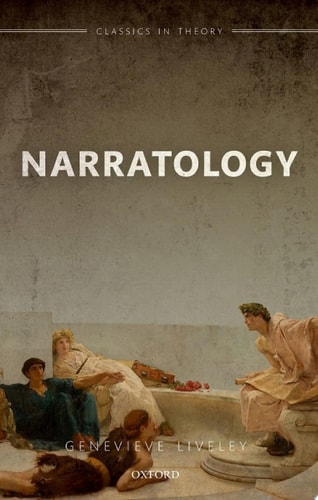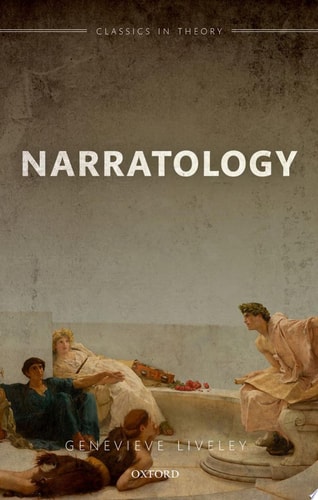
Narratology
0
0
As an Amazon Associate and affiliate partner, Menrva Books earns from qualifying purchases. Learn more
Author Description
This Volume Explores The Extraordinary Contribution That Classical Poetics Has Made To Twentieth And Twenty-first Century Theories Of Narrative, Aiming Not To Argue That Modern Narratologies Simply Present 'old Wine In New Wineskins', But Rather To Identify The Diachronic Affinities Shared Between Ancient And Modern Stories About Storytelling. By Recognizing That Modern Narratologists Bring A Particular Expertise To Bear Upon Ancient Literary Theory, And By Interrogating Ancient And Modern Narratologies Through The Mutually Imbricating Dynamics Of Their Reception, It Seeks To Arrive At A Better Understanding Of Both. Each Chapter Selects A Key Moment In The History Of Narratology On Which To Focus, Providing An Overview Of Significant Phases Before Offering Detailed Analyses Of Core Theories And Texts, From The Russian Formalists And Chicago School Neo-aristotelians, Through The Prestructuralists, Structuralists, And Poststructuralists, Up To The Latest Unnatural And Antimimetic Narratologists. The Reception History That Thus Unfolds Offers Some Remarkable Plot Twists And Yields Valuable Insights Into The Interpretation Of Some Notoriously Difficult Ancient Works. Plato In The Republic Is Unmasked As An Unreliable Narrator And Theorist, While Aristotle's On Poets Reveals A Rare Glimpse Of The Philosopher Putting Narrative Theory Into Practice In The Role Of Storyteller. Horace's Ars Poetica And The Works Of Ancient Scholia By Critics And Commentators Evince A Rhetorically Conceived Poetics And Sophisticated Reader-response-based Narratology Which Indicate A Keen Interest In Audience Affect And Cognition - Anticipating The Cognitive Turn In Narratology's Most Recent Postclassical Phase.
Menrva's Summary
THE THESIS
This volume investigates the diachronic relationship between classical poetics and modern narrative theory to determine how ancient and contemporary frameworks inform one another. Genevieve Liveley, a scholar of classics, utilizes a reception-history methodology to bridge the gap between ancient texts and twentieth-century narratological developments. By examining the evolution of storytelling theory, the author argues that modern narratology is not merely a repetition of ancient ideas but a sophisticated dialogue that enhances the interpretation of both classical and contemporary works.
THE SCOPE MAP
What You Will Find
- Historical analysis of narrative theory from Russian Formalism to postclassical and unnatural narratology
- Re-evaluations of Plato, Aristotle, and Horace through the lens of modern narrative theory
- Examination of reader-response dynamics and cognitive narratology in ancient texts
Scope Limits
- The text does not provide a comprehensive history of all world literature, focusing specifically on the Western classical tradition
- It does not serve as a general introduction to narratology for those without prior knowledge of literary theory
THE AUTHORITY PERSPECTIVE
Scholars and students of literary theory frequently cite this work for its ability to synthesize complex historical developments in poetics with modern analytical frameworks. Experts highlight the text as a valuable resource for understanding the intellectual lineage of narrative studies.
Page Count:
320
Publication Date:
2019-01-01
Publisher:
Oxford University Press
ISBN-10:
0192524437
ISBN-13:
9780192524430
Narratology
Literary Criticism
Poetics
Literary theory