Inspiration and Authority in the Middle Ages
0
0
As an Amazon Associate and affiliate partner, Menrva Books earns from qualifying purchases. Learn more
Author Description
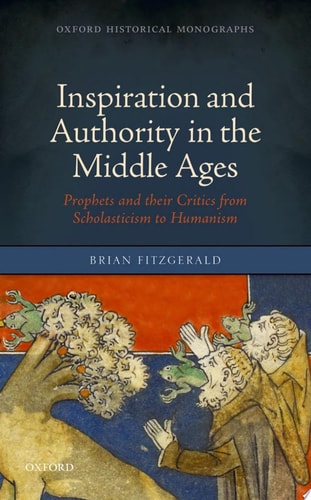
Inspiration And Authority In The Middle Ages Rethinks The Role Of Prophecy In The Middle Ages By Examining How Professional Theologians Responded To New Assertions Of Divine Inspiration. Drawing On Fresh Archival Research And Detailed Study Of Unpublished Manuscript Sources From The Twelfth To Fourteenth Centuries, This Volume Argues That The Task Of Defining Prophetic Authority Became A Crucial Intellectual And Cultural Enterprise As University-trained Theologians Confronted Prophetic Claims From Lay Mystics, Radical Franciscans, And Other Unprecedented Visionaries. In The Process, These Theologians Redescribed Their Own Activities As Prophetic By Locating Inspiration Not In Special Predictions Or Ecstatic Visions But In Natural Forms Of Understanding And In The Daily Work Of Ecclesiastical Teaching And Ministry. Instead Of Containing The Spread Of Prophetic Privilege, However, Scholastic Assessments Of Prophecy From Peter Lombard And Thomas Aquinas To Peter John Olivi And Nicholas Trevet Opened Space For Claims Of Divine Insight To Proliferate Beyond The Control Of Theologians. By The Turn Of The Fourteenth Century, Secular Italian Humanists Could Lay Claim To Prophetic Authority On The Basis Of Their Intellectual Powers And Literary Practices. From Hugh Of St Victor To Albertino Mussato, Reflections On And Debates Over Prophecy Reveal Medieval Clerics, Scholars, And Reformers Reshaping The Contours Of Religious Authority, The Boundaries Of Sanctity And Sacred Texts, And The Relationship Of Tradition To The New Voices Of The Late Middle Ages.
Menrva's Summary
THE THESIS
This volume investigates how medieval theologians redefined the nature of prophetic authority in response to emerging claims of divine inspiration from lay mystics and radical groups. Brian F. Fitzgerald, a scholar of medieval intellectual history, utilizes fresh archival research and previously unpublished manuscript sources from the twelfth to fourteenth centuries. He argues that university-trained theologians shifted the definition of prophecy away from ecstatic visions toward the natural intellectual labor of teaching and ministry, inadvertently expanding the scope of who could claim divine insight.
THE SCOPE MAP
What You Will Find
- Analysis of scholastic assessments of prophecy from figures including Peter Lombard, Thomas Aquinas, Peter John Olivi, and Nicholas Trevet.
- Examination of the transition from medieval theological frameworks to the intellectual claims of secular Italian humanists.
- Investigation into the shifting boundaries of religious authority and the status of sacred texts during the late Middle Ages.
Scope Limits
- The study focuses primarily on the intellectual and theological discourse of the twelfth to fourteenth centuries.
- The analysis does not cover the broader socio-political history of the period outside of its direct impact on theological definitions of prophecy.
THE AUTHORITY PERSPECTIVE
Experts identify this work as a significant contribution to the study of medieval intellectual history and the evolution of religious authority. Readers frequently note the academic density of the prose, which is well-suited for scholars and students of medieval theology.
Page Count:
304
Publication Date:
2017-01-01
Publisher:
Oxford University Press
ISBN-10:
019253582X
ISBN-13:
9780192535825
History
Philosophy
Intellectual History
Religious History
Theology
Community Tags
Similar Books