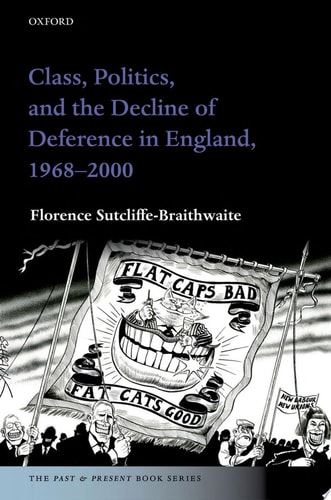
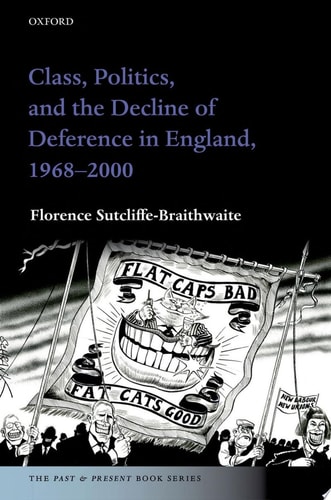
Class, Politics, and the Decline of Deference in England, 1968-2000
0
0
As an Amazon Associate and affiliate partner, Menrva Books earns from qualifying purchases. Learn more
Author Description
In Late Twentieth-century England, Inequality Was Rocketing, Yet Some Have Suggested That The Politics Of Class Was Declining In Significance, While Others Argue That Class Identities Lost Little Power. Neither Interpretation Is Satisfactory: Class Remained Important To 'ordinary' People's Narratives About Social Change And Their Own Identities Throughout The Period 1968-2000, But In Changing Ways. Using Self-narratives Drawn From A Wide Range Of Sources - The Raw Materials Of Sociological Studies, Transcripts From Oral History Projects, Mass Observation, And Autobiography - The Book Examines Class Identities And Narratives Of Social Change Between 1968 And 2000, Showing That By The End Of The Period, Class Was Often Seen As An Historical Identity, Related To Background And Heritage, And That Many Felt Strict Class Boundaries Had Blurred Quite Profoundly Since 1945. Class Snobberies 'went Underground', As Many People From All Backgrounds Began To Assert That What Was Important Was Authenticity, Individuality, And Ordinariness. In Fact, Sutcliffe-braithwaite Argues That It Is More Useful To Understand The Cultural Changes Of These Years Through The Lens Of The Decline Of Deference, Which Transformed People's Attitudes Towards Class, And Towards Politics. The Study Also Examines The Claim That Thatcher And New Labour Wrote Class Out Of Politics, Arguing That This Simple - And Highly Political - Narrative Misses Important Points. Thatcher Was Driven By Political Ideology And Necessity To Try To Dismiss The Importance Of Class, While The New Labour Project Was Good At Listening To Voters - Particularly Swing Voters In Marginal Seats - And Echoing Back What They Were Increasingly Saying About The Blurring Of Class Lines And The Importance Of Ordinariness. But This Did Not Add Up To An Abandonment Of A Majoritarian Project, As New Labour Reoriented Their Political Project To Emphasize Using The State To Empower The Individual.
Menrva's Summary
THE THESIS
This book investigates how the decline of deference in England between 1968 and 2000 fundamentally altered the public perception of class and political identity. Dr. Florence Sutcliffe-Braithwaite, a historian specializing in twentieth-century British social and political history, challenges the binary argument that class either vanished or remained static during this era. By analyzing a diverse array of self-narratives, she posits that class identity shifted from a rigid social structure to a historical marker of heritage, while the cultural value of 'ordinariness' rose to prominence.
THE SCOPE MAP
What You Will Find
- Analysis of social change in England from 1968 to 2000
- Examination of the political strategies of the Thatcher era and New Labour
- Investigation into the cultural shift toward authenticity and individuality
- Qualitative data from oral history projects, Mass Observation archives, and autobiographies
Scope Limits
- The study focuses primarily on England rather than the broader United Kingdom
- The analysis does not prioritize economic quantitative data over subjective self-narratives
THE AUTHORITY PERSPECTIVE
Scholars and historians recognize this work as a significant contribution to the study of post-war British social identity. Readers frequently note the academic density of the prose and the author's meticulous use of primary source self-narratives to support her historical arguments.
Page Count:
272
Publication Date:
2018-01-01
Publisher:
Oxford University Press
ISBN-10:
0192540718
ISBN-13:
9780192540713
History
British History
Sociology
Class Studies
Social History
Community Tags
Other Editions(2)
Similar Books






Reader Comments
Share Your Thoughts
No comments yet. Be the first to share your thoughts!