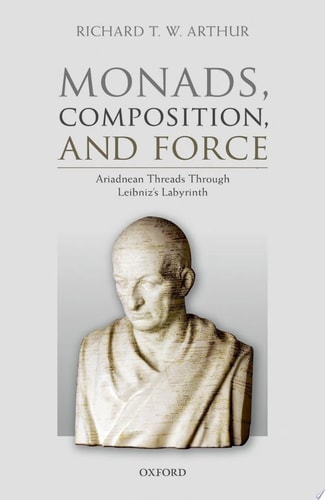
Monads, Composition, and Force
0
0
As an Amazon Associate and affiliate partner, Menrva Books earns from qualifying purchases. Learn more
Author Description
Leibniz's Monads Have Long Been A Source Of Fascination And Puzzlement. If Monads Are Merely Immaterial, How Can They Alone Constitute Reality? In Monads, Composition And Force, Richard T. W. Arthur Takes Seriously Leibniz's Claim Of Introducing Monads To Solve The Problem Of The Composition Of Matter And Motion. Going Against A Trend Of Idealistic Interpretations Of Leibniz's Thought, Arthur Argues That Although Monads Are Presupposed As The Principles Making Actual Each Of The Infinite Parts Of Matter, Bodies Are Not Composed Of Them. He Offers A Fresh Interpretation Of Leibniz's Theory Of Substance In Which Monads Are Enduring Primitive Forces, Corporeal Substances Are Embodied Monads, And Bodies Are Aggregates Of Monads, Not Mere Appearances. In This Reading The Monads Are Constitutive Unities, Constituting An Organic Unity Of Function Through Time, And Bodies Are Phenomenal In Two Senses; As Ever-changing Things They Are Platonic Phenomena And As Pluralities, In Being Perceived Together, They Are Also Democritean Phenomena. Arthur Argues For This Reading By Describing How Leibniz's Thought Is Grounded In Seventeenth Century Atomism And The Metaphysics Of The Plurality Of Forms, Showing How His Attempt To Make This Foundation Compatible With Mechanism Undergirds His Insightful Contributions To Biological Science And The Dynamical Foundations He Provides For Modern Physics.
Menrva's Summary
THE THESIS
This work investigates the core question of how Leibniz’s theory of monads functions as a solution to the problem of the composition of matter and motion. Richard T. W. Arthur, a scholar of early modern philosophy, challenges the prevailing idealistic interpretations of Leibniz. By grounding his analysis in seventeenth-century atomism and the metaphysics of the plurality of forms, Arthur argues that monads are enduring primitive forces that constitute organic unities rather than serving as mere building blocks for physical bodies.
THE SCOPE MAP
What You Will Find
- A re-evaluation of Leibnizian substance theory regarding monads and corporeal substances.
- An analysis of the distinction between Platonic and Democritean phenomena in Leibniz's work.
- A historical contextualization of Leibniz's thought within seventeenth-century atomism and mechanism.
Scope Limits
- The text does not provide a general biography of Leibniz, focusing strictly on his metaphysical and dynamical theories.
- It does not attempt to reconcile Leibnizian thought with contemporary quantum mechanics beyond the historical foundations provided.
THE AUTHORITY PERSPECTIVE
Scholars recognize this text as a significant intervention in Leibnizian studies, particularly for its departure from traditional idealistic readings. Readers frequently note the academic density of the prose, which requires a strong background in early modern metaphysics to fully grasp the author's arguments.
Page Count:
368
Publication Date:
2018-01-01
Publisher:
Oxford University Press
ISBN-10:
019254215X
ISBN-13:
9780192542151
Philosophy
Atomism
Metaphysics
Physics
Philosophy history
Leibniz
Community Tags
Other Editions(2)
Similar Books