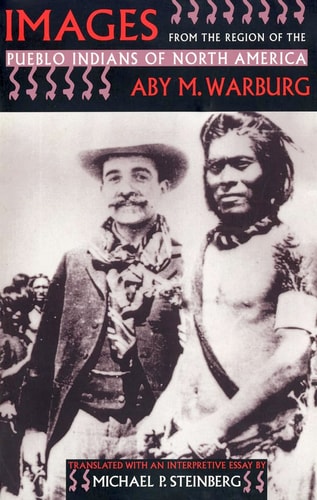
Images from the Region of the Pueblo Indians of North America
0
0
As an Amazon Associate and affiliate partner, Menrva Books earns from qualifying purchases. Learn more
Author Description
Aby M. Warburg (1866-1929) is recognized not only as one of the century's preeminent art and renaissance historians but also as a founder of twentieth-century methods in iconology and cultural studies in general. Warburg's 1923 lecture, first published in German in 1988 and now available in the first complete English translation, offers at once a window on his career, a formative statement of his cultural history of modernity, and a document in the ethnography of the American Southwest. This edition includes thirty-nine photographs, many of them originally presented as slides with the speech, and a rich interpretive essay by the translator. The presentation grew out of Warburg's 1895 encounter with the Hopi Indians, an experience he claimed generated his theory of the Renaissance. In this powerfully written piece, Warburg investigates the relationships among ethnography, iconography, and cultural studies to develop a multicultural history of modernity. As an independent scholar in Hamburg, Warburg led the intellectual circle that included Erwin Panofsky and Ernst Cassirer, pioneers in the investigation of cultural history through the analysis of visual art and the interpretation of symbols. When Warburg wrote this exposition, however, he was a mental patient in a Kreuzlingen sanatorium. Warburg's vulnerable state of mind lends urgency and passion to his discussion of human rationality and cultural demons.
Menrva's Summary
THE THESIS
Aby Warburg presents a seminal lecture that bridges art history, cultural studies, and ethnography, exploring the profound impact of his encounter with the Pueblo Indians on his theory of the Renaissance. Warburg, a pioneering art and renaissance historian, delivers a formative statement on the cultural history of modernity, drawing from his 1923 lecture. This work offers a unique perspective on his career and his innovative methods in iconology and cultural studies. The presentation is deeply informed by his 1895 experience with the Hopi Indians, which he believed was the catalyst for his Renaissance theories, and investigates the intricate relationships between ethnography, iconography, and cultural studies to construct a multicultural history of modernity.
THE SCOPE MAP
- A complete English translation of Aby Warburg's 1923 lecture, originally published in German in 1988.
- Thirty-nine photographs, many of which were originally presented as slides during the lecture.
- An interpretive essay by the translator, providing rich context and analysis.
- An exploration of the connection between Warburg's encounter with the Pueblo Indians and his theory of the Renaissance.
- An investigation into the relationships among ethnography, iconography, and cultural studies.
- A discussion on the development of a multicultural history of modernity.
- Insights into Warburg's personal state of mind as a mental patient, lending urgency to his discourse on rationality and cultural forces.
THE AUTHORITY PERSPECTIVE
Aby Warburg's lecture is recognized as a foundational text in iconology and cultural studies, offering a unique lens through which to view the history of modernity. The inclusion of photographs and a translator's essay enhances its accessibility and interpretive depth. The work is particularly noted for its exploration of the cross-cultural influences that shaped Warburg's theories, especially his engagement with the American Southwest. The personal vulnerability expressed by Warburg during his sanatorium stay imbues the text with a compelling emotional resonance, making it a significant document in both intellectual history and the study of cultural exchange.
Page Count:
114
Publication Date:
1995-01-01
Publisher:
Cornell University Press
ISBN-10:
0801429730
ISBN-13:
9780801429736
Non-Fiction
History
Religion
Art
Art History
Ethnography
American Southwest
Community Tags
Similar Books