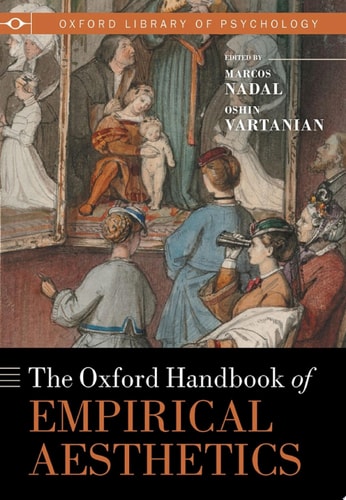
The Oxford Handbook of Empirical Aesthetics
0
0
As an Amazon Associate and affiliate partner, Menrva Books earns from qualifying purchases. Learn more
Author Description
Humans have engaged in artistic and aesthetic activities since the appearance of our species. Our ancestors have decorated their bodies, tools, and utensils for over 100,000 years. The expression of meaning using color, line, sound, rhythm, or movement, among other means, constitutes a fundamental aspect of our species' biological and cultural heritage. Art and aesthetics, therefore, contribute to our species identity and distinguish it from its living and extinct relatives. Science is faced with the challenge of explaining the natural foundations of such a unique trait, and the way cultural processes nurture it into magnificent expressions, historically and ethnically unique. How do the human mind and brain bring about these sorts of behaviors? What psychological and neural processes underlie the appreciation of painting, music, and dance? How does training modulate these processes? Are humans the only species capable of aesthetic appreciation, or are other species endowed with the rudiments of this capacity? Empirical examinations of such questions have a long and rich history in the discipline of psychology, the genesis of which can be traced back to the publication of Gustav Theodor Fechner's Vorschule der Aesthetik in 1876, making it the second oldest branch in experimental psychology.The Oxford Handbook of Empirical Aesthetics brings together leading experts in psychology, neuroimaging, art history, and philosophy to answer these questions. It provides the most comprehensive coverage of the domain of empirical aesthetics to date. With sections on visual art, dance, music, and many other art forms and aesthetic phenomena, the breadth of this volume's scope reflects the richness and variety of topics and methods currently used today by scientists to understand the way our mind and brain endow us with the faculty to produce and appreciate art and aesthetics.
Menrva's Summary
THE THESIS
This volume investigates the biological, psychological, and neural foundations that enable humans to produce and appreciate art and aesthetic phenomena. Editors Marcos Nadal and Oshin Vartanian curate a collection of contributions from experts in neuroimaging, psychology, and philosophy to synthesize the current state of empirical aesthetics. The text argues that aesthetic behavior is a fundamental aspect of human heritage, requiring a multidisciplinary framework to understand how the mind and brain process artistic expression.
THE SCOPE MAP
What You Will Find
- Comprehensive analysis of visual art, dance, and music perception
- Examination of the historical development of experimental aesthetics since Fechner
- Integration of neuroimaging data and cognitive psychological models
- Cross-disciplinary perspectives from art history and philosophy
Scope Limits
- Does not provide a singular unified theory of aesthetics
- Excludes non-empirical or purely subjective aesthetic critiques
THE AUTHORITY PERSPECTIVE
Experts recognize this volume as a foundational reference for researchers and students in the field of empirical aesthetics. Readers frequently note the academic density of the prose and the breadth of the research covered, making it a standard text for those studying the intersection of neuroscience and the arts.
Page Count:
1098
Publication Date:
2022-01-01
Publisher:
OUP Oxford
ISBN-10:
0192557726
ISBN-13:
9780192557728
Psychology
Philosophy
Neuroscience
Art History
Community Tags
Other Editions(3)


Similar Books









Reader Comments
Share Your Thoughts
No comments yet. Be the first to share your thoughts!