Author Description
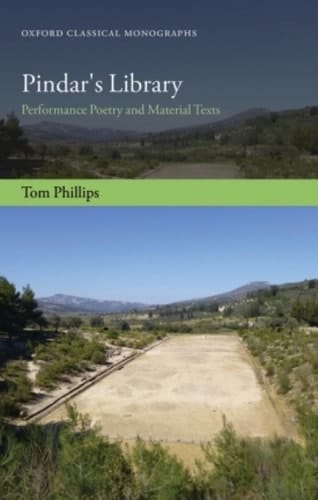
Recent scholarship on early Greek lyric has been primarily concerned with the immediate contexts of its first performance. This volume instead turns its attention to the rhetoric and realities of poetic permanence. Taking Pindar and archaic Greek literary culture as its focus, it offers a new reading of Pindar's victory odes which explores not only how they were received by those who first experienced them, but also what they can mean to later audiences. Part One of the discussion investigates Pindar's relationship to both of these audiences, demonstrating how his epinicia address the listeners present at their premiere performance and also a broader secondary audience across space and time. It argues that a full appreciation of these texts involves taking both perspectives into account. Part Two describes how Pindar engages with a wide variety of other poetry, particularly earlier lyric, in order to situate his work both within an immanent poetic history and a contemporary poetic culture. It shows how Pindar's vision of the world shaped the meaning of his work and illuminates the context within which he anticipated its permanence. The book offers new insights into the texts themselves and invites us to rethink early Greek poetic culture through a combination of historical and literary perspectives.
Menrva's Summary
THE THESIS
This volume investigates how Pindar’s victory odes construct a sense of poetic permanence by addressing both their immediate performance context and a future, secondary audience. Henry Spelman, a scholar of classical literature, utilizes a combination of historical and literary analysis to examine the rhetoric of Pindar’s epinicia. He argues that the poet intentionally crafted his work to function within both the contemporary culture of the archaic period and a broader, enduring poetic history.
THE SCOPE MAP
What You Will Find
- Analysis of Pindar’s victory odes and their reception across time
- Examination of Pindar’s engagement with earlier Greek lyric traditions
- Theoretical framework regarding the rhetoric of poetic endurance
Scope Limits
- The study does not provide a comprehensive biography of Pindar
- It does not cover the entirety of archaic Greek literature beyond its relevance to Pindar’s specific poetic project
THE AUTHORITY PERSPECTIVE
Scholars in the field of classical studies recognize this work as a significant contribution to the understanding of Pindar’s reception and literary strategy. Readers frequently note the academic density of the prose, which is intended for an audience familiar with classical philology and ancient Greek poetic traditions.
Page Count:
384
Publication Date:
2018-01-01
Publisher:
OUP Oxford
ISBN-10:
0192554409
ISBN-13:
9780192554406
History
Poetry
English & College Success
Pindar
Literary Criticism
Greek poetry
English
Community Tags
Similar Books