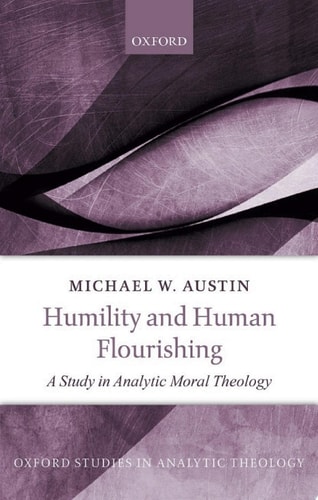
Humility and Human Flourishing: A Study in Analytic Moral Theology
0
0
As an Amazon Associate and affiliate partner, Menrva Books earns from qualifying purchases. Learn more
Author Description
In many Christian traditions, humility is often thought to play a central role in the moral and spiritual life. In this study of the moral virtue of humility, Michael W. Austin applies the methods of analytic philosophy to the field of moral theology in order analyze this virtue and its connections to human flourishing. The book is therefore best characterized as a work in analytic moral theology, and has two primary aims. First, it articulates and defends a particular Christian conception of the virtue of humility. It offers a Christological account of this trait, one that is grounded in the gospel accounts of the life of Christ as well as other key New Testament passages. The view of humility it offers and defends is biblically grounded, theologically informed, and philosophically sound. Second, the volume describes ways in which humility is constitutive of and conducive to human flourishing, Christianly understood. It argues that humility is rational, benefits its possessor, and contributes to its possessor being good qua human. Austin also examines several issues in applied virtue ethics. He considers some of the ways in which humility is relevant to several of the classic spiritual disciplines, such as prayer, fasting, solitude, silence, and service. He considers humility's relevance to issues related to religious pluralism and tolerance. Finally, the book concludes with a discussion of the relevance of humility for family life and how it can function as a virtue in the context of sport.
Menrva's Summary
THE THESIS
This study investigates the moral and spiritual significance of humility by examining its definition, its Christological foundations, and its essential role in human flourishing. Michael W. Austin, a scholar in philosophy and ethics, utilizes the framework of analytic moral theology to bridge the gap between biblical narrative and philosophical rigor. He argues that humility is not merely a passive trait but a rational, beneficial virtue that is constitutive of a well-lived life when understood through a Christian lens.
THE SCOPE MAP
What You Will Find
- A Christological account of humility based on New Testament texts
- Philosophical analysis of humility as a virtue
- Applications of humility to spiritual disciplines like prayer and fasting
- Discussions on the role of humility in religious pluralism, family life, and sports
Scope Limits
- The analysis is explicitly framed within Christian theology and may not address secular or non-Western philosophical perspectives on humility
- The work focuses on theoretical and applied ethics rather than historical surveys of the concept
THE AUTHORITY PERSPECTIVE
Scholars and students of moral theology frequently cite this work for its successful integration of analytic philosophical methods with traditional Christian virtue ethics. Experts highlight the text as a rigorous resource for those seeking to understand how classical spiritual disciplines intersect with modern ethical theory.
Page Count:
256
Publication Date:
2018-01-01
Publisher:
OUP Oxford
ISBN-10:
0192567950
ISBN-13:
9780192567956
Religion
Christian ethics
Virtue Ethics
Humility
Theology
Moral Philosophy
Community Tags
Similar Books