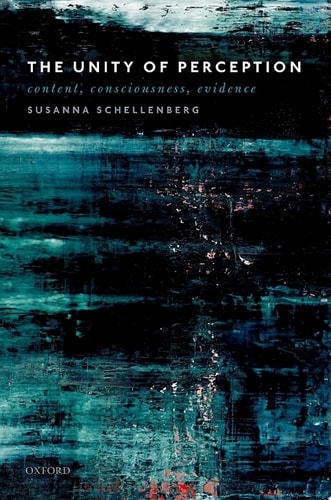
The Unity of Perception
0
0
As an Amazon Associate and affiliate partner, Menrva Books earns from qualifying purchases. Learn more
Author Description
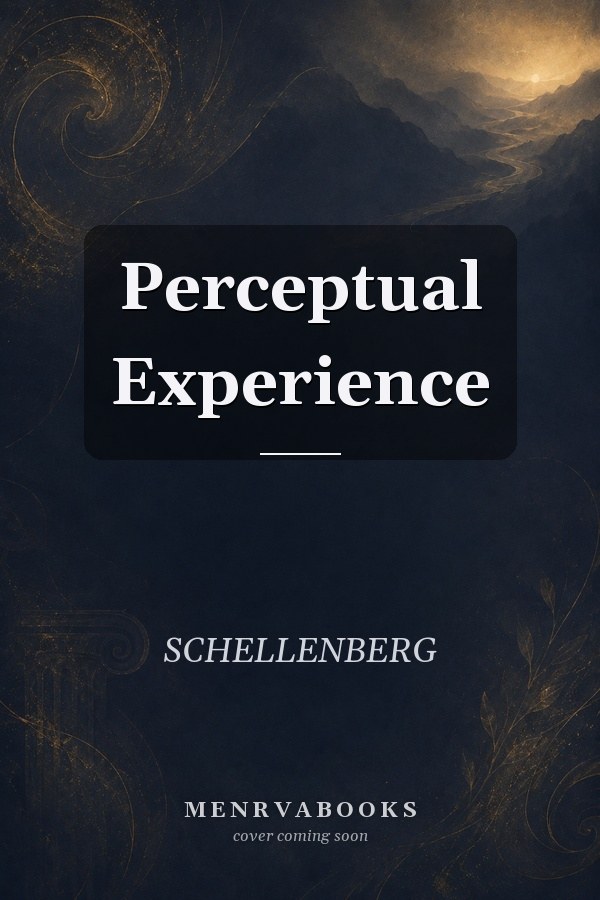
Perception Is Our Key To The World. It Plays At Least Three Different Roles In Our Lives. It Justifies Beliefs And Provides Us With Knowledge Of Our Environment. It Brings About Conscious Mental States. It Converts Informational Input, Such As Light And Sound Waves, Into Representations Of Invariant Features In Our Environment. Corresponding To These Three Roles, There Are At Least Three Fundamental Questions That Have Motivated The Study Of Perception. How Does Perception Justify Beliefs And Yield Knowledge Of Our Environment? How Does Perception Bring About Conscious Mental States? How Does A Perceptual System Accomplish The Feat Of Converting Varying Informational Input Into Mental Representations Of Invariant Features In Our Environment? This Book Presents A Unified Account Of The Phenomenological And Epistemological Role Of Perception That Is Informed By Empirical Research. So It Develops An Account Of Perception That Provides An Answer To The First Two Questions, While Being Sensitive To Scientific Accounts That Address The Third Question. The Key Idea Is That Perception Is Constituted By Employing Perceptual Capacities - For Example The Capacity To Discriminate Instances Of Red From Instances Of Blue. Perceptual Content, Consciousness, And Evidence Are Each Analyzed In Terms Of This Basic Property Of Perception. Employing Perceptual Capacities Constitutes Phenomenal Character As Well As Perceptual Content. The Primacy Of Employing Perceptual Capacities In Perception Over Their Derivative Employment In Hallucination And Illusion Grounds The Epistemic Force Of Perceptual Experience. In This Way, The Book Provides A Unified Account Of Perceptual Content, Consciousness, And Evidence.
Menrva's Summary
THE THESIS
This book investigates the fundamental nature of perception by proposing a unified account that bridges its phenomenological and epistemological roles. Susanna Schellenberg, a philosopher specializing in the philosophy of mind and epistemology, synthesizes empirical research with conceptual analysis to argue that perception is constituted by the employment of perceptual capacities. By focusing on how these capacities function, the author provides a framework that addresses how perception justifies beliefs, generates conscious mental states, and processes environmental information.
THE SCOPE MAP
What You Will Find
- A unified theory of perceptual content, consciousness, and evidence.
- An analysis of the distinction between veridical perception, hallucination, and illusion.
- A framework for understanding how perceptual capacities ground epistemic force.
Scope Limits
- The text does not provide a comprehensive neurobiological manual for sensory processing.
- It does not focus on the historical development of perceptual theories beyond their relevance to the author's specific argument.
THE AUTHORITY PERSPECTIVE
Philosophers and cognitive scientists frequently cite this work as a rigorous contribution to contemporary debates regarding the nature of perceptual experience. Scholars often note the technical density of the prose, which is intended for an academic audience familiar with analytic philosophy and epistemology.
Page Count:
272
Publication Date:
2018-01-01
Publisher:
Oxford University Press
ISBN-10:
0192562681
ISBN-13:
9780192562685
Philosophy
Perception
Philosophy of
Epistemology
Community Tags
Similar Books