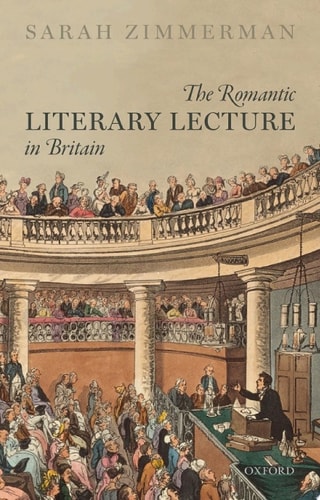
The Romantic Literary Lecture in Britain
Author Description
At the beginning of the nineteenth century, the literary lecture arrived on London's cultural scene as an influential critical medium and popular social event. It flourished for two decades in the hands of the period's most prominent lecturers: Samuel Taylor Coleridge, John Thelwall, Thomas Campbell, and William Hazlitt. Lecturers aimed to shape auditors' reading habits, burnish their own professional profiles, and establish a literary canon. Auditors wielded their own considerable influence, since their sustained approbation was necessary to a lecturer's success, and independent series could collapse midway if attendance waned. Two chapters are therefore devoted to the auditors, whose creative responses to what they heard often constituted cultural works in their own right. Auditors wrote poems and letters about lecture performances, acted as patrons to lecturers, and hosted dinners and conversation parties that followed these events. Prominent auditors included John Keats, Mary Russell Mitford, Henry Crabb Robinson, Catherine Maria Fanshawe, and Lady Charlotte Bury. The Romantic public literary lecture is a fascinating cultural phenomenon in its own right, but understanding the medium has significant implications for some of the period's most important literary criticism, such as Coleridge's readings of Shakespeare and Hazlitt's Lectures on the English Poets (1818). The book's two main aims are to chart the emergence of the literary lecture as a popular medium and to develop a critical approach to these events by drawing on an interdisciplinary discussion about how to treat historical speaking performances.
Menrva's Summary
THE THESIS
How did the emergence of the public literary lecture in nineteenth-century London shape the development of the literary canon and the professionalization of criticism? Sarah Zimmerman, a scholar of Romantic-era literature, investigates the intersection of public performance and critical discourse during the early nineteenth century. By analyzing the symbiotic relationship between prominent lecturers like Samuel Taylor Coleridge and William Hazlitt and their audiences, the author argues that these events were not merely passive consumption but active, collaborative cultural productions that defined the period's intellectual landscape.
THE SCOPE MAP
What You Will Find
- Historical analysis of the rise of the literary lecture as a social and critical medium in London.
- Examination of the reciprocal influence between lecturers and their auditors.
- Case studies of major figures including Coleridge, Thelwall, Campbell, and Hazlitt.
- Exploration of the role of auditors as creative participants who documented and supported these performances.
Scope Limits
- The study focuses primarily on the two-decade period of the early nineteenth century in London.
- It does not provide a comprehensive history of all public speaking formats, focusing specifically on literary-themed lectures.
THE AUTHORITY PERSPECTIVE
Scholars recognize this work as a significant contribution to the study of Romantic-era print and performance culture. The text is noted for its rigorous archival research and its ability to bridge the gap between literary criticism and historical performance studies.
Page Count:
256
Publication Date:
2019-01-01
Publisher:
OUP Oxford
ISBN-10:
0192569562
ISBN-13:
9780192569561
History
Literary Criticism
Cultural History
19th Century
Academic
British History
Romanticism
Indigenous
Community Tags
Similar Books