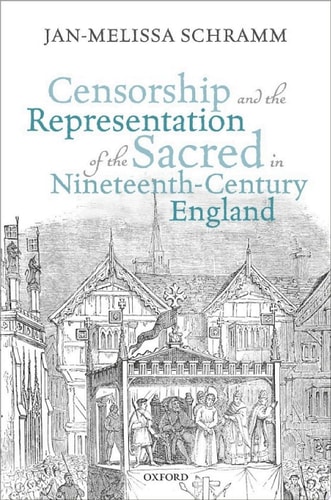
Censorship and the Representation of the Sacred in Nineteenth-Century England
0
0
As an Amazon Associate and affiliate partner, Menrva Books earns from qualifying purchases. Learn more
Author Description
Throughout the nineteenth century, the performance of sacred drama on the English public stage was prohibited by law and custom left over from the Reformation: successive Examiners of Plays, under the control of the Lord Chamberlain's Office, censored and suppressed both devotional and blasphemous plays alike. Whilst the Biblical sublime found expression in the visual arts, the epic, and the oratorio, nineteenth-century spoken drama remained secular by force of precedent and law. The maintenance of this ban was underpinned by Protestant anxieties about bodily performance, impersonation, and the power of the image that persisted long after the Reformation, and that were in fact bolstered by the return of Catholicism to public prominence after the passage of the Catholic Relief Act in 1829 and the restoration of the Catholic Archbishoprics in 1850. But even as anti-Catholic prejudice at mid-century reached new heights, the turn towards medievalism in the visual arts, antiquarianism in literary history, and the 'popular' in constitutional reform placed England's pre- Reformation past at the centre of debates about the uses of the public stage and the functions of a truly national drama. This book explores the recovery of the texts of the extant mystery-play cycles undertaken by antiquarians in the early nineteenth century and the eventual return of sacred drama to English public theatres at the start of the twentieth century. Consequently, law, literature, politics, and theatre history are brought into conversation with one another in order to illuminate the history of sacred drama and Protestant ant-theatricalism in England in the long nineteenth-century.
Menrva's Summary
THE THESIS
This book investigates the legal, cultural, and theological mechanisms that prohibited sacred drama on the English public stage throughout the nineteenth century. Author Jan-Melissa Schramm examines the intersection of Protestant anti-theatricalism, the Lord Chamberlain's censorship policies, and the evolving political landscape of Victorian England. By synthesizing legal history, literary analysis, and religious studies, the work argues that the suppression of biblical performance was deeply rooted in anxieties regarding bodily impersonation and the perceived dangers of Catholic iconography. The text traces how these tensions eventually shifted, allowing for the recovery of mystery-play cycles and the eventual return of sacred drama to the public sphere.
THE SCOPE MAP
What You Will Find
- Analysis of the Lord Chamberlain's Office and the legal precedents governing theatrical censorship.
- Examination of the impact of the Catholic Relief Act of 1829 and the restoration of Catholic Archbishoprics on public discourse.
- Study of the antiquarian recovery of medieval mystery-play cycles.
- Exploration of the relationship between Protestant identity and the prohibition of religious performance.
Scope Limits
- The study focuses primarily on the English public stage and does not provide an exhaustive global history of religious drama.
- The analysis centers on the long nineteenth century, concluding at the start of the twentieth century.
THE AUTHORITY PERSPECTIVE
Scholars recognize this work as a significant contribution to the study of Victorian theatre history and the intersection of law and literature. Readers frequently note the academic density of the prose and the author's meticulous integration of archival legal records with cultural analysis.
Page Count:
278
Publication Date:
2019-01-01
Publisher:
OUP Oxford
ISBN-10:
0192560557
ISBN-13:
9780192560551
History
Indigenous
Censorship
Literary Criticism
Nineteenth century
Great Britain
Religion and literature
Theatre History
19th Century
Community Tags
Other Editions(3)


Similar Books

Reader Comments
Share Your Thoughts
No comments yet. Be the first to share your thoughts!