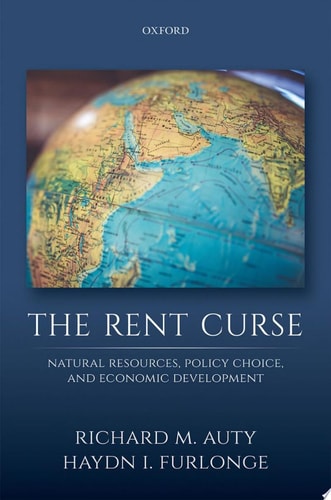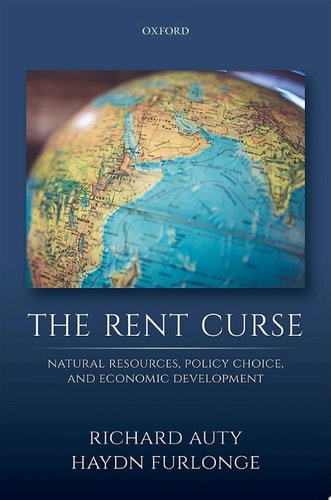
The Rent Curse: Natural Resources, Policy Choice, and Economic Development
0
0
As an Amazon Associate and affiliate partner, Menrva Books earns from qualifying purchases. Learn more
Author Description
The resource curse is a variant of a wider rent curse that can also be driven by geopolitical rent, regulatory rent, and labour rent. Total rent can therefore be from one-tenth to two-fifths of GDP and sometimes more. Rent is detached from the activity that generates it and is up for grabs so it feeds contents for its capture and its deployment can radically impact the development trajectory for better or worse, all too often for worse. The Rent Curse: Natural Resources, Policy Choice, and Economic Development studies two rent driven models to suggest that low rent incentivizes the elite to grow the economy efficiently, whereas high rent encourages rent siphoning for immediate enrichment at the expense of long-term growth. It looks at low rent Mauritius and high rent Trinidad and Tobago to show that low rent stimulates rapid and relatively egalitarian economic growth with incremental democratization, whereas high rent inhibits competitive diversification and frequently causes protracted growth collapses. The post-war prioritization of industry has proved a double edged sword. The Rent Curse employs rent driven models to explain why low rent East Asia has closed the income gap with advanced economies; why rent rich Latin America may be de-industrializing; why agricultural neglect launched sub-Saharan Africa on a false start to economic development; why South Asia pioneers growth through export services; and why governmenets in the oil-rich Gulf states raised the incomes of nationals without conferring the skills to sustain them.
Menrva's Summary
THE THESIS
This book investigates the mechanisms by which different types of economic rents—natural resource, geopolitical, regulatory, and labor—influence national development trajectories and policy outcomes. Authors Haydn I. Furlonge and Richard M. Auty utilize a comparative framework to argue that the volume of rent available to a state dictates whether elites prioritize long-term economic efficiency or short-term rent extraction. By analyzing various global case studies, the authors demonstrate how high-rent environments frequently lead to institutional capture and growth stagnation, while low-rent environments often incentivize competitive diversification and sustainable development.
THE SCOPE MAP
What You Will Find
- Comparative analysis of low-rent models versus high-rent models
- Case studies focusing on Mauritius, Trinidad and Tobago, East Asia, Latin America, sub-Saharan Africa, and the Gulf states
- Theoretical framework linking rent levels to democratization and industrialization
Scope Limits
- Does not provide a comprehensive history of all global economic development
- Does not offer specific policy prescriptions for individual nations beyond the general rent-management framework
THE AUTHORITY PERSPECTIVE
Experts recognize this work as a significant contribution to the literature on the resource curse by expanding the definition of rent beyond natural resources. Readers frequently note the academic density of the prose, which makes it a valuable resource for students and practitioners of development economics.
Page Count:
277
Publication Date:
2018-01-01
Publisher:
OUP Oxford
ISBN-10:
0192564013
ISBN-13:
9780192564016
Economics
Macroeconomics
Public Policy