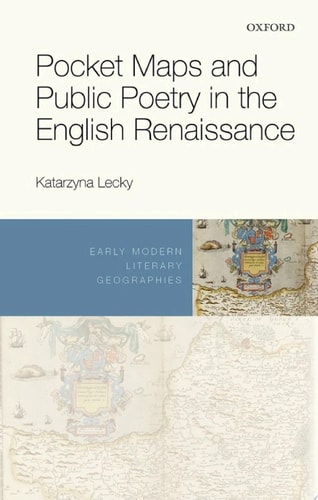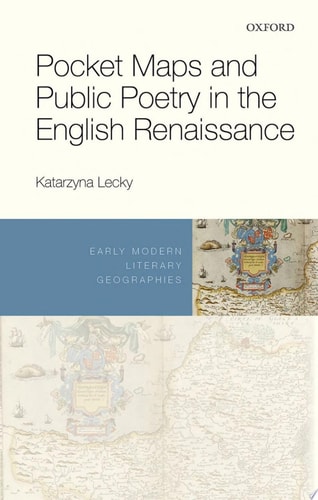
Pocket Maps and Public Poetry in the English Renaissance
0
0
As an Amazon Associate and affiliate partner, Menrva Books earns from qualifying purchases. Learn more
Author Description
Katarzyna Lecky Explores How Early Modern British Poets Paid By The State Adapted Inclusive Modes Of Nationhood Charted By Inexpensive, Small-format Maps. She Explores Chapbooks ('cheapbooks') By Edmund Spenser, Samuel Daniel, Ben Jonson, William Davenant, And John Milton Alongside The Portable Cartography Circulating In The Same Retail Print Industry. Domestic Pocket Maps Were Designed For Heavy Use By A Broad Readership That Included Those On The Fringes Of Literacy. The Era's De Facto Laureates All Banked Their Success As Writers Appealing To This Burgeoning Market Share By Drawing The Nation As The Property Of The Commonwealth Rather Than The Crown. This Book Investigates The Accessible World Of Small-format Cartography As It Emerges In The Texts Of The Poets Raised In The Expansive Public Sphere In Which Pocket Maps Flourished. It Works At The Intersections Of Space, Place, And National Identity To Reveal The Geographical Imaginary Shaping The Flourishing Business Of Cheap Print. Its Placement Of Poetic Economies Within Mainstream Systems Of Trade Also Demonstrates How Cartography And Poetry Worked Together To Mobilize Average Consumers As Political Agents. This Everyday Form Of Geographic Poiesis Was Also A Strong Platform For Poets Writing For Monarchs And Magistrates When Their Visions Of The Nation Ran Counter To The Interests Of The Government.
Menrva's Summary
THE THESIS
This book investigates how early modern British poets utilized the visual and conceptual frameworks of inexpensive, small-format pocket maps to redefine national identity within the public sphere. Katarzyna Lecky, a scholar of early modern literature, examines the intersection of poetic production and the commercial print industry. She argues that poets like Spenser, Jonson, and Milton aligned their work with the accessible, portable cartography of the era to position the nation as a commonwealth rather than the exclusive property of the Crown.
THE SCOPE MAP
What You Will Find
- Analysis of chapbooks and small-format maps from the English Renaissance period.
- Examination of the economic relationship between poets and the retail print industry.
- Case studies of works by Edmund Spenser, Samuel Daniel, Ben Jonson, William Davenant, and John Milton.
Scope Limits
- The study focuses primarily on the intersection of poetry and cartography rather than a comprehensive history of all Renaissance map-making.
- It does not provide an exhaustive biography of the poets mentioned, focusing instead on their engagement with the public sphere.
THE AUTHORITY PERSPECTIVE
Scholars in the field of early modern studies recognize this work for its interdisciplinary approach to literary and material culture. Experts highlight the text as a significant contribution to understanding how geographic media influenced political discourse in the seventeenth century.
Page Count:
304
Publication Date:
2019-01-01
Publisher:
Oxford University Press
ISBN-10:
0192571753
ISBN-13:
9780192571755
Poetry
Cartography
History of Print
Literary Criticism
Cultural History
English Renaissance