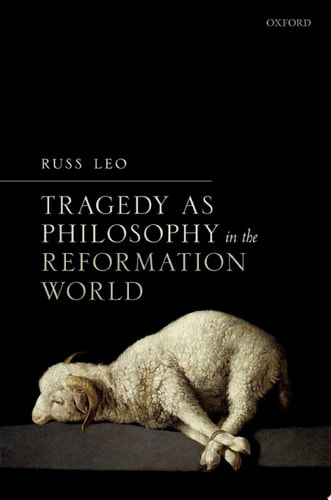
Tragedy as Philosophy in the Reformation World
0
0
As an Amazon Associate and affiliate partner, Menrva Books earns from qualifying purchases. Learn more
Author Description
Tragedy as Philosophy in the Reformation World examines how sixteenth- and seventeenth-century poets, theologians, and humanist critics turned to tragedy to understand providence and agencies human and divine in the crucible of the Reformation. Rejecting familiar assumptions about tragedy, vital figures like Philipp Melanchthon, David Pareus, Lodovico Castelvetro, John Rainolds, and Daniel Heinsius developed distinctly philosophical ideas of tragedy, irreducible to drama or performance, inextricable from rhetoric, dialectic, and metaphysics. In its proximity to philosophy, tragedy afforded careful readers crucial insight into causality, probability, necessity, and the terms of human affect and action. With these resources at hand, poets and critics produced a series of daring and influential theses on tragedy between the 1550s and the 1630s, all directly related to pressing Reformation debates concerning providence, predestination, faith, and devotional practice. Under the influence of Aristotle's Poetics, they presented tragedy as an exacting forensic tool, enabling attentive readers to apprehend totality. And while some poets employed tragedy to render sacred history palpable with new energy and urgency, others marshalled a precise philosophical notion of tragedy directly against spectacle and stage-playing, endorsing anti-theatrical theses on tragedy inflected by the antique Poetics. In other words, this work illustrates the degree to which some of the influential poets and critics in the period, emphasized philosophical precision at the expense of--even to the exclusion of--dramatic presentation. In turn, the work also explores the impact of scholarly debates on more familiar works of vernacular tragedy, illustrating how William Shakespeare's Hamlet and John Milton's 1671 poems take shape in conversation with philosophical and philological investigations of tragedy. Tragedy as Philosophy in the Reformation World demonstrates how Reformation took shape in poetic
Menrva's Summary
THE THESIS
This work investigates how sixteenth- and seventeenth-century intellectuals redefined tragedy as a philosophical instrument to navigate complex theological debates regarding providence and human agency. Russ Leo, a scholar of early modern literature and intellectual history, utilizes a rigorous analysis of humanist texts, theological treatises, and classical commentaries to argue that tragedy was frequently conceptualized as a forensic tool rather than mere theatrical performance. By examining the intersection of rhetoric, dialectic, and metaphysics, the author demonstrates how these figures utilized tragedy to address the pressing concerns of the Reformation era.
THE SCOPE MAP
What You Will Find
- Analysis of intellectual figures including Philipp Melanchthon, David Pareus, and Lodovico Castelvetro.
- Examination of the influence of Aristotle's Poetics on Reformation-era literary theory.
- Exploration of the tension between philosophical tragedy and anti-theatrical sentiment.
- Connections between scholarly debates and canonical works by William Shakespeare and John Milton.
Scope Limits
- The text focuses primarily on the philosophical and philological dimensions of tragedy rather than the history of stage performance or dramatic production.
THE AUTHORITY PERSPECTIVE
Scholars in the field of early modern studies recognize this text as a significant contribution to the understanding of how classical literary theory was adapted to serve theological ends. Readers frequently note the academic density of the prose, which requires a strong background in Renaissance intellectual history to fully appreciate the author's nuanced arguments.
Page Count:
307
Publication Date:
2019-01-01
Publisher:
OUP Oxford
ISBN-10:
0192571680
ISBN-13:
9780192571687
History
Philosophy
Theology
English & College Success
Literary Criticism
Tragic The
Reformation
English
Community Tags
Other Editions(3)


Similar Books
Reader Comments
Share Your Thoughts
No comments yet. Be the first to share your thoughts!